Ict Support

  • Subscribe to our RSS feed.
  • Twitter
  • StumbleUpon
  • Reddit
  • Facebook
  • Digg
Showing posts with label Aichi Biodiversity Targets. Show all posts

Wednesday, 16 October 2013

Seventeenth SBSTTA Meeting Enters Final Day of Panel Discussions, With Drafting of "Conclusions" to Begin Thursday

Posted on 02:23 by Unknown
As the seventeenth meeting of the Subsidiary Body on Scientific, Technical and Technological Advice (SBSTTA) to the Convention on Biological Diversity (CBD) continues in Montreal, Parties and Observers continue to address the Strategic Goals and Aichi Targets of the Strategic Plan for Biodiversity 2011-2020. The meeting is being conducted with a combination of short speeches by members of panels who are selected based on their expertise in the Strategic Goal being addressed, followed by interventions on the part of Parties and Observers. This format means that some interventions with regard to a specific Strategic Goal are not able to be heard during the plenary and are pushed to the following day. On Thursday, 17 October, the agenda calls for the drafting of "conclusions and recommendations for further work." (Agenda link here.)

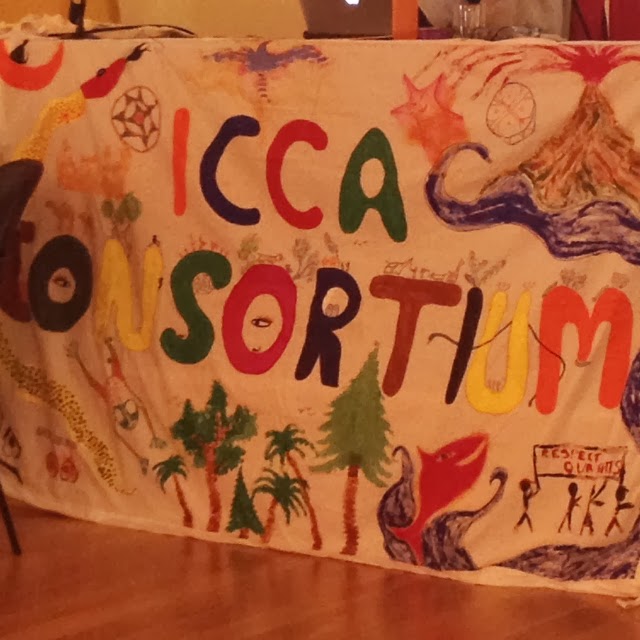
Thus far, Natural Justice has been involved in the SBSTTA meeting in several ways. On Monday, Eli Makagon spoke at a side event held by the CBD Alliance regarding a proposed ABS regulation to implement the Nagoya Protocol in the European Union (EU) currently pending before the European Council (for further information, see links on this page). On Tuesday, 15 October, Eli, with the assistance of Nele Marien, coordinator of the CBD Alliance, briefed delegates from the Latin American and Caribbean Group (GRULAC) on the EU's proposed regulation, noting that it severely limits the Nagoya Protocol's scope by limiting its application to genetic resources and associated traditional knowledge accessed after the Nagoya Protocol enters into force for the EU. On Wednesday, 16 October, Natural Justice and the Global Forest Coalition will co-host, along with the ICCA Consortium, a side event on meeting the Aichi Targets. In addition, Natural Justice will be attending several other side events as well as the ongoing plenary sessions. For more immediate updates and further information on the meeting, check out Natural Justice's Twitter feed online at https://twitter.com/naturaljustice.
Read More
Posted in ABS Regulations, Aichi Biodiversity Targets, CBD, Nagoya Protocol, SBSTTA | No comments

Tuesday, 15 October 2013

Seventeenth Meeting of the SBSTTA Begins in Montreal, Canada

Posted on 00:42 by Unknown
On October 14, 2013, country delegates, representatives of Indigenous peoples and local communities, and other participants came together in Montreal, Canada for the seventeenth meeting of the Subsidiary Body on Scientific, Technical and Technological Advice (SBSTTA). This meeting, chaired by Mr. Gemedo Dalle Tussie (Ethiopia), is particularly noteworthy because it involves an entirely new meeting format. In the past, the Secretariat of the Convention on Biological Diversity (CBD) prepared draft recommendations that the Parties attending the SBSTTA meeting then considered throughout the meeting's course. This year, however, the CBD Secretariat did not prepare any draft recommendations. Instead, the first three days of the 17th meeting will consist of expert panels addressing issues on the SBSTTA agenda. Summaries of the discussions held during those panels will then be created in order to draft "conclusions, and if appropriate, recommendations." (UNEP/CBD/SBSTTA/17/1/Add.2, para. 6(c)). The effectiveness and ramifications of this new format remain to be seen, and some countries have called into question whether the decision to change the format conforms with the decisions regarding SBSTTA adopted during prior Conferences of the Parties.

On the agenda for this meeting are 2 main items: Item 3 -- Facilitating the implementation of the Strategic Plan for Biodiversity 2011-2020 and the Aichi Biodiversity Targets through scientific and technical means; and Item 4 -- Assessing the effects of the types of measures taken in accordance with the provisions of the Convention. With regard to Item 3, only the first four Strategic Goals of the Strategic Plan for Biodiversity (Goals A-D) will be discussed. Thus, Strategic Goal E, and its crucial Target 18 regarding traditional knowledge of and customary use of biological resources by indigenous peoples and local communities will dot be addressed.
Natural Justice will be participating in this meeting in a number of ways, including speaking at a side event on the European Union's draft legislation on ABS, co-hosting a side event on how territories and areas conserved by Indigenous peoples and local communities (ICCAs) can help to achieve the Aichi Targets, as well as be working with other NGOs and CBOs throughout the meeting to address issues as they arrive. Additionally, Natural Justice has co-authored a Working Paper on Legal Aspects of Aichi Biodiversity Target 11that will be presented at a side event hosted by the IDLO. 

For more information on the SBSTTA meeting, see here for a list of meeting documents and the side event calendar.
Read More
Posted in ABS, Aichi Biodiversity Targets, Convention on Biological Diversity, ICCAs, SBSTTA | No comments

Monday, 7 October 2013

International Meeting of the ICCA Consortium

Posted on 04:02 by Unknown
The Indigenous Peoples' and Community Conserved Territories and Areas (ICCA) Consortium held its annual international meeting, including its General Assembly from the 4th-6th of October, in Valdeavellano de Tera, Spain. 

Natural Justice is a founding member of the ICCA Consortium and Holly Shrumm (Natural Justice) and Lesle Jansen (Natural Justice) are its International Policy Adviser and Co-ordinator for Southern and East Africa respectively. 

During the 3 days, members of the Consortium from Africa, Asia, the Americas and Europe shared their experiences on work with ICCAs. Among the discussions were experiences from Philippines and Europe in which communities have been able to successfully protect their ICCAs.


Gino Cocchiaro (Natural Justice) presented on and discussed ICCAs and the Aichi targets as well as facilitating a meeting organized by the Global Forest Coalition on its Community Conservation Resilience Assessment. Participants of the meeting also held discussions on the future activities of the Consortium, including supporting member activities and attendance at international meetings relevant to the legal protection of ICCAs.

Meeting participants also had the pleasure of travelling to and meeting with community members of the Valdeavellano area to learn of their efforts to manage and protect their local environments.
Read More
Posted in Aichi Biodiversity Targets, Global Forest Coalition, ICCA Consortium | No comments

Monday, 29 October 2012

Recognising Sacred Sites Could Double Conserved Area

Posted on 08:48 by Unknown
Via www.cifor.org
As attendees of the 11th Conference of Parties (COP 11) to the Convention on Biological Diversity (CBD) discussed how conserved areas can be increased from 12 to 17 percent of the earth's land to meet target 11 of the Aichi Biodiversity Targets by the 2020 deadline, some representatives argued that recognising lands sacred to indigenous communities could double the amount of protected land worldwide. Granting this status to areas conserved by indigenous communities would not only improve the conservation of land with immense biodiversity, it will also strengthen communities and help to keep them intact according to a recent blog post by the Centre for International Forestry Research (CIFOR). 

The blog post cites the director of Natural Justice partner MELCA, Million Belay, who also feels that this recognition will strengthen and legitimise traditional knowledge. Bas Vershuuren, co-chair of the IUCN specialist group on cultural and spiritual values of protected areas and also a Natural Justice partner, said that through the recognition of sacred sites, conservation can be decentralised as opposed to the way it is currently practiced. 

Read the full blog post here. 
Read More
Posted in Aichi Biodiversity Targets, CBD, COP 11, Protected Areas, Sacred Sites | No comments

Sunday, 21 October 2012

Overview of Key CBD COP11 Outcomes

Posted on 23:27 by Unknown
Kabir Bavikatte (left) and Holly Shrumm (Natural Justice)
discussing key issues in the negotiations towards a plan
of action on customary sustainable use. Photo via IISD-RS.
Natural Justice was recently in India for the 11th Conference of the Parties (COP11) to the Convention on Biological Diversity (CBD), which took place from 8-19 October in Hyderabad. In addition to a range of events and meetings, we actively participated in the negotiations, with particular emphasis on the draft decisions on Article 8(j) and Related Provisions, Sustainable Use of Biodiversity, and Protected Areas. Other key agenda items for which we provided technical guidance and coordination assistance through the CBD Alliance and ICCA Consortium included: Monitoring Progress on the Implementation of the Strategic Plan and Aichi Biodiversity Targets; Review of the Programme of Work on Island Biodiversity; Ecosystem Restoration; Marine and Coastal Biodiversity; Biodiversity and Climate Change; Biodiversity for Poverty Eradication and Development; Biological Diversity of Inland Water Ecosystems; Forest Biodiversity; and Agricultural Biodiversity.

The overriding emphasis of the negotiations was on setting the foundations for resource mobilisation and policy alignment for implementation of the 2011-2020 Strategic Plan and Aichi Biodiversity Targets. Amongst the 33 decisions adopted, there were many provisions of direct relevance to the work of Natural Justice and our partners.
A selection of relevant provisions include (in numerical order):
  • Decision XI/1 (Status of the Nagoya Protocol on Access and Benefit Sharing): Parties to undertake and provide support for capacity building initiatives, including participation of Indigenous peoples and local communities in legal, policy and decision-making processes, and the development of community protocols;
  • Decision XI/2 (Review of Progress in Implementation of National Biodiversity Strategies and Action Plans): Parties to include all stakeholders, including Indigenous peoples and local communities, in planning and implementing national biodiversity strategies and action plans;
  • Decision XI/7 (Business and Biodiversity): Parties to help businesses assess and effectively address their impacts on biodiversity and on Indigenous peoples and local communities;
  • Decision XI/14 (Article 8(j) and Related Provisions): under the section on progress in implementation, Parties to include in requests to the Global Environment Facility and Small Grants Programme and other donors support for Indigenous peoples and local communities to organise themselves, to develop community plans and protocols, to document, map and register their ICCAs, and to prepare and implement their community conservation plans; and to provide support to countries to strengthen recognition of ICCAs; 
  • Decision XI/14 (Article 8(j) and Related Provisions): under the section on Article 10 and 10(c) as a major component of the programme of work, Parties decided that the three initial tasks for the new work on Article 10 and 10(c) are to incorporate customary sustainable use practices or policy into national biodiversity strategies and action plans; to promote and strengthen community-based initiatives; and to identify best practices to promote the full and effective participation of Indigenous peoples and local communities in the establishment, expansion, governance, and management of protected areas, to encourage the application of traditional knowledge and customary sustainable use in protected areas, and to promote the use of community protocols to affirm and promote customary sustainable use in protected areas;
  • Decision XI/14 (Article 8(j) and Related Provisions): under the section on recommendations from the Permanent Forum on Indigenous Issues, Parties to further consider adopting the phrase "indigenous peoples and local communities" (instead of "indigenous and local communities") at the next Working Group on Article 8(j) and at COP12 in 2014;
  • Decision XI/16 (Ecosystem Restoration): Parties to promote the full and effective participation of Indigenous peoples and local communities and the use of traditional knowledge and practices in appropriate ecosystem restoration activities;
  • Decision XI/17 (Marine and Coastal Biodiversity: EBSAs): Parties to also use traditional knowledge and social and cultural information to help describe and identify ecologically or biologically significant marine areas;
  • Decision XI/21 (Other Matters Related to Biodiversity and Climate Change): Parties to take into account traditional knowledge, innovations and practices when addressing the impacts of climate change;
  • Decision XI/22 (Biodiversity for Poverty Eradication and Development): Parties to protect and encourage the customary use of biological resources and to promote biodiversity and development projects that empower women and Indigenous peoples and local communities; an Expert Group on the same topic will, among other things, develop a conceptual framework and guidance on how to assess the role of collective action and the efforts of Indigenous peoples and local communities in conservation, stewardship, and sustainable management of biodiversity and natural renewable resources, including exploring the role of non-market-based approaches;
  • Decision XI/24 (Protected Areas): Parties to strengthen recognition of and support for community-based approaches to in situ conservation and sustainable use, including Indigenous peoples' and community conserved territories and areas (ICCAs), and support the development of local and international registries of ICCAs; to direct benefits arising from the use of genetic resources to enhance management and establishment of protected areas and share benefits with Indigenous peoples and local communities; and
  • Decision XI/25 (Sustainable Use): Parties to build and strengthen capacities of Indigenous peoples and local communities to exercise rights and responsibilities to sustainably manage wildlife resources.

Further Information

The advance unedited version of all COP11 decisions is now available online. Daily coverage and a detailed summary report of the negotiations are available online courtesy of the International Institute for Sustainable Development Reporting Services (IISD-RS). The CBD Alliance and CBD Secretariat published the latest issue of their joint newsletter, [square brackets], for the beginning of COP11 and the issues remain relevant.
Read More
Posted in Aichi Biodiversity Targets, Article 8j, biocultural community protocols, CBD, COP 11, Customary Sustainable Use, ICCAs, Indigenous Peoples Rights, Local Communities, Protected Areas, Traditional Knowledge | No comments

Overview of Key CBD COP11 Events

Posted on 21:46 by Unknown
Harry Jonas (Natural Justice) launching the study on legal
and institutional aspects of ICCAs. Photo via IISD-RS.
Natural Justice was recently in India for the 11th Conference of the Parties (COP11) to the Convention on Biological Diversity (CBD), which took place from 8-19 October in Hyderabad. With a range of civil society, network, government, and intergovernmental partners, we co-organised, presented at and/or attended the following key meetings and events:
  • 6-7 October: CBD Alliance preparatory meeting;
  • 8 October: side event on the legal weight and implementation of the CBD;
  • 9 October: workshop on Indigenous peoples' and local community conserved territories and areas (ICCAs) in South Asia, organised by Kalpavriksh and others;
  • 9 October: side event to launch the joint study on Legal and Institutional Aspects of Recognising and Supporting Conservation by Indigenous Peoples and Local Communities (full list of reports available here);
  • 9 October: informal meeting with India-based partners in the Asia Regional Initiative on Biocultural Community Protocols, with particular emphasis on Livestock Keepers' Rights in the context of the 2006 Forest Rights Act;
  • 10 October: side event on the Joint Programme of Work on Biological and Cultural Diversity between the CBD and UNESCO;
  • 11 October: side event on social and cultural dimensions of marine and coastal protected areas, organised by the International Collective in Support of Fishworkers;
  • 11 October: workshop on national federations and coalitions of Indigenous peoples and local communities, organised by the ICCA Consortium and others;
  • 11 October: side event on biocultural community protocols and free, prior and informed consent, drawing from the recent special issue of the Participatory Learning and Action journal, which Natural Justice co-edited;
  • 12 October: side event to launch the CBD Technical Series on Recognising and Supporting ICCAs, which Natural Justice co-edited;
  • 12 October: side event on experiences and opportunities for civil society partnerships with access and benefit sharing through the Global Environment Facility Small Grants Programme;
  • 12 October: side event on the new online platform to support revision and implementation of National Biodiversity Strategies and Action Plans (NBSAPs)
  • 13 October: colloquium on ICCAs and the Aichi Biodiversity Targets, organised by the CBD Secretariat;
  • 15 October: side event on UNDP support for ICCAs;
  • 16 October: Rio Pavilion event on Reducing Emissions from Deforestation and Forest Degradation (REDD+);
  • 16 October: side event on the International Finance Corporation's Performance Standards on Environmental and Social Sustainability;
  • 16 October: press conference on Namibia's Community-Based Natural Resource Management Programme;
  • 18 October: high-level panel on implementation of the Nagoya Protocol on Access and Benefit Sharing;
  • 18 October: side event on strengthening governance, participation, equity, and benefit-sharing aspects of NBSAPs with Indigenous peoples and local communities; and
  • 19 October: side event on the Biodiversity in Good Company Initiative.
We also attended a series of meetings throughout COP11 to progress plans for the Community Conservation Resilience Assessment in collaboration with the Global Forest Coalition and others, and for the project on legal preparedness to achieve the Aichi Targets in collaboration with the International Development Law Organisation and the Centre for International Sustainable Development Law.

Daily coverage of select side events is available online courtesy of the International Institute for Sustainable Development Reporting Services (IISD-RS).
Read More
Posted in Aichi Biodiversity Targets, biocultural community protocols, CBD, CBD Alliance, COP 11, Customary Sustainable Use, ICCAs, Legal Review, NBSAPs | No comments

Sunday, 14 October 2012

CBD Secretariat Hosts Colloquium on ICCAs and Aichi Targets

Posted on 07:38 by Unknown
Participants of national conference on ICCAs in the 
Philippines, which took place in March 2012. Photo via
iccaforum.org.
According to a notification of the Secretariat of the Convention on Biological Diversity (CBD), Indigenous peoples’ and local community conserved territories and areas (ICCAs) provide multiple ecological, cultural and biodiversity values, contribute greatly to food and water security and other ecosystem processes, and help achieve the Strategic Plan for Biodiversity 2011-2020 and Aichi Biodiversity Targets. ICCAs play a critical role in ensuring access and respecting rights to customary sustainable use and facilitating inter-generational communication of traditional environmental knowledge, innovations and practices. The Secretariat continues by noting that ICCAs are increasingly recognised as the living embodiment of both Articles 8(j) and 10(c) of the CBD.

In an effort to support implementation of these Articles and several past CBD decisions, on 13 October at the 11th Conference of the Parties to the Convention on Biological Diversity (CBD COP11), the CBD Secretariat co-hosted a one-day colloquium on the role of ICCAs in achieving the 2011-2020 Aichi Biodiversity Targets, along with the governments of Brazil, India, Mexico, the Philippines, Senegal, and South Africa, the ICCA Consortium, the International Indigenous Forum on Biodiversity, and Conservation International.

The colloquium was opened by the Deccan Development Society and several Dalit farmers, who gave a spiritual blessing and spoke about the challenges they have faced on the road to securing food sovereignty. Opening remarks were given by the following esteemed speakers: Braulio Ferreira de Souza Dias (Executive Secretary, CBD); Delfin Ganapin (Global Coordinator, GEF Small Grants Programme); Russell Mittermeier (President, Conservation International); Taghi Farvar (President, ICCA Consortium); and Trevor Sandwith (Director, IUCN Global Protected Areas Programme). Following a presentation by John Scott and Sarat Gidda (CBD Secretariat) on the linkages between ICCAs and global policy, Ashish Kothari (Kalpavriksh) gave a keynote address on a global study compiled by the ICCA Consortium, Kalpavriksh, Natural Justice, and IUCN-TILCEPA on legal and non-legal forms of recognition and support for ICCAs. The study was published as Technical Series Volume 64 by the CBD Secretariat. (A complementary global study coordinated by Natural Justice and Kalpavriksh on behalf of the ICCA Consortium focused in more depth on legal and institutional aspects of recognizing and supporting ICCAs and is available online.)

The rest of the colloquium consisted of three engaging panels that highlighted experiences and lessons learned from Asia-Pacific, Africa, and Latin America and the Caribbean. Each panel was chaired by a government representative from the respective region and included presentations by Indigenous peoples, NGOs, and governments.

The CBD Secretariat's official notification of the colloquium and the day's programme can be viewed here.  A summary report is available here. More information about the ICCA Consortium's engagement in COP11 can be found here.
Read More
Posted in Aichi Biodiversity Targets, CBD, COP11, ICCAs, Indigenous Peoples Rights, Legal Review, Local Communities, Our Work | No comments

Thursday, 11 October 2012

New CBD Newsletter - Achieving the Aichi Biodiversity Targets

Posted on 07:21 by Unknown
The Secretariat of the Convention on Biological Diversity (CBD) and the CBD Alliance have released a new edition of Square Brackets, the newsletter they publish jointly. This edition’s focus is on Achieving the Aichi Biodiversity Targets, and includes interviews with six heads of agencies of the Aichi Biodiversity Targets Task Force. Natural Justice’s Holly Shrumm served on the editorial board for the publication. 

The interviews with the heads of the task force agencies seek to understand how their agencies are contributing to the objectives of the task force, the challenges in doing so, and how civil society, indigenous peoples, and local community organizations can work with their respective agencies in achieving the Aichi Targets. Each interview offers valuable insight into the task force’s work and areas for partnering with civil society. Other fascinating articles consider the enforcement of the CBD, the importance of input from community voices, a discussion of equitable governance and management in protected areas, and what can be expected from the 11th Conference of Parties of the CBD. 

The full newsletter can be downloaded here.
Read More
Posted in Aichi Biodiversity Targets, CBD, COP11, Our Work | No comments

Thursday, 13 September 2012

UNEP Protected Planet Report

Posted on 08:05 by Unknown
The United Nations Environment Programme's World Conservation Monitoring Center (UNEP-WCMC) has released its first ever "Protected Planet Report." The report seeks to track global progress towards achieving Target 11 of the Convention on Biological Diversity’s (CBD) Aichi Biodiversity Targets. The report was compiled by UNEP-WCMC, the International Union for Conservation of Nature's World Commission on Protected Areas and a wide range of organisations that build on the work of the CBD-mandated Biodiversity Indicators Partnership.

The report, which will now be released semi-annually, notes that while the protected area network is growing towards achieving targets in terms of area covered, many protected areas do not offer adequate protection for endangered species. The report also reveals that protected area management is changing dramatically around the world. According to Nature's write up of the report, "in 1990, just 14% of protected areas allowed hunting and other sustainable uses of natural resources, but today that number has risen to 32%. At the same time, the amount of area managed exclusively by governments has declined from 96% to 77%, a trend reflecting the rise of community-based conservation and co-management schemes with indigenous peoples."

Nature's story on the report can be accessed here. IUCN's description of the report can be found here. The report can be downloaded here. 
Read More
Posted in Aichi Biodiversity Targets, IUCN, Protected Areas, Target 11 | No comments

Wednesday, 12 September 2012

IUCN Journal on PAs and Conservation Re-Launched

Posted on 02:20 by Unknown
The International Union for Conservation of Nature (IUCN) has released the first edition of its re-launched PARKS: The International Journal of Protected Areas and Conservation. The journal includes contributions on a wide range of subjects important to protected areas and conservation including ocean protection, protecting indigenous grasslands in New Zealand, the impact of veterinary fencing in southern Africa, the linkages between human health and well-being and protected areas in Canada, and a discussion of motivations for hunting in Iran. The journal was co-edited by Sue Stolton and Nigel Dudley of IUCN’s World Commission on Protected Areas (WCPA) and Equilibrium Research. 

Two articles consider Target 11 of the Aichi Biodiversity Targets, which references "other effective area-based conservation measures", which can include Indigenous peoples' and local community conserved territories and areas (ICCAs). An editorial by Nik Lopoukhine, Chair of the IUCN WCPA, and Braulio Ferreira de Souza Dias, Executive Secretary of the Convention on Biological Diversity, seeks clarity on which “management approaches are, and are not, to be included within the land and water areas established under the auspices of the target.” “Meeting Aichi Target 11: What Does Success Look Like for Protected Area Systems?” is authored by several  IUCN and United Nations Environment Programme staff and argues for “a holistic interpretation of Target 11 as a way for the global community to use protected areas to change the current unacceptable trends in global biodiversity loss.” 

The full journal can be downloaded here. Information on the journal and links to individual articles can be found here. Find IUCN on Facebook here and on Twitter at @IUCN. 
Read More
Posted in Aichi Biodiversity Targets, Biodiversity, CBD, IUCN, Protected Areas, Target 11 | No comments
Older Posts Home
Subscribe to: Posts (Atom)

Popular Posts

  • Warsaw Climate Change Conference
    The 19th session of the Conference of the Parties to the United Nations Framework Convention on Climate Change takes place in Warsaw, Poland...
  • ICCA meeting for Southern and East Africa discusses ICCA examples from the region
    On 8 November Natural Justice and the ICCA Consortium co-convened a meeting near Cape Town, South Africa, on Indigenous Peoples and Local ...
  • New Research Questions Effectiveness of RSPO Standards
    "Members of the Roundtable on Sustainable Palm Oil ( RSPO ) are violating the rights of indigenous peoples and local communities in the...
  • Substantive and Procedural Injustices of the Nagoya Protocol
    A Joint Submission of the Grand Council of the Crees (Eeyou Istchee), endorsed by 73 organizations globally (and counting), comprehensively ...
  • Imbak Canyon Ethno-forestry
    Harry Jonas of Natural Justice presented on "ABS: From International Law to Local Realities" at a workshop hosted by Yayasan Sab...
  • United Nations Permanent Forum on Indigenous Issues Enters Second Week
    The twelfth session of the United Nations Permanent Forum on Indigenous Issues (UNPFII) is currently taking place at United Nations headqu...
  • Second edition of The Living Convention is now available in English and Spanish
    The Living Convention provides a range of the most important provisions relating to the linkages between Indigenous peoples and local commu...
  • International Workshop on ICCAs in Thika, Kenya
    On November 5th 2013, Maya Sikand from Natural Justice attended and presented at an International Workshop on ICCAs in Thika, Kenya. The wor...
  • Africa Regional Symposium for Community Land and Natural Resources Protection
    From 5-7 November, 30 pioneering community and civil society experts gathered in the !khwa ttu San community centre outside Cape Town, South...
  • South-South Exchange Mechanism
    On Thursday October 31st Maya Sikand of Natural Justice attended a meeting of the South-South Exchange Mechanism at the Global South-South ...

Categories

  • Aarhus Convention
  • ABS
  • ABS Capacity Development
  • ABS Capacity Development Initiative
  • ABS Focal Points
  • ABS Initiative
  • ABS Intiative
  • ABS Legislation
  • ABS Regulations
  • access and benefit sharing
  • Access to Justice
  • Accountability
  • ACHPR
  • Adaptation
  • Africa
  • African BCP
  • African Biodiversity Network
  • African Caucus
  • African Court on Human and People's Rights
  • African Group
  • African Union Commission
  • agricultural investments
  • Agriculture
  • Aichi Biodiversity Targets
  • AICHR
  • AIPP
  • ALDAW
  • ALF
  • Alien Tort Statute
  • Amazon
  • ARI-BCP
  • ARI-BCPs
  • Article 8j
  • Artisanal Fishing
  • ASEAN
  • Ashoka Fellowship
  • Asia
  • AU
  • Australia
  • BCP
  • BCP Initiative
  • BCP Toolkit
  • BCPs
  • BCRs
  • Benefit sharing
  • Berne Declaration
  • Bhutan
  • bio-cultural community protocols
  • biocultural community protocols
  • Biocultural Dialogues
  • Biocultural Diversity
  • Biocultural Rights
  • Biodiversity
  • Biodiversity Conservation
  • Biofuels
  • BIOPAMA
  • Biopiracy
  • bioprospecting
  • Biotrade
  • Borana
  • Borneo Conservancy Initiative
  • Borneo Eco Film Festival
  • Brazil
  • Bushbuckridge
  • Business
  • Business and Human Rights
  • Cambodia
  • CAO
  • Capacity Development
  • Carol Rose
  • CBD
  • CBD Alliance
  • CBNRM
  • CCPCJ
  • CEDAW
  • CFR
  • Childrens Rights
  • Chinese Ministry of Commerce
  • CIFOR
  • CIKOD
  • Climate change
  • Climate Change Adaptation
  • Commons
  • Communications
  • Community Empowerment
  • community film-making
  • community forest resources
  • Community Governance
  • Community Land Rights
  • Community Protocols
  • community resource rights
  • Community Rights
  • community-based conservation
  • conflict prevention
  • Conservation
  • Conservation Governanace
  • Consultation
  • Convention on Biological Diversity
  • Convention to Combat Desertification
  • COP 11
  • COP 18
  • COP11
  • corporate liability
  • Costa Rica
  • CSR
  • Customary Justice
  • Customary Sustainable Use
  • Design
  • Development
  • development aggression
  • Dialogue
  • Documentation
  • Doha
  • DRC
  • Dusun
  • E-Learning
  • ECCHR
  • ECO
  • Economic Growth
  • Ecosystem Services
  • Ecuador
  • Education
  • Employment
  • EMRIP
  • Endorois Case
  • Energy
  • ENVI
  • Environmental Impact Assessment
  • Environmental Law
  • environmental protection
  • ESPA
  • ETC COMPAS
  • EU
  • Eviction
  • Extractive Industries
  • FAO
  • Farmers' Rights
  • FCPF
  • Finance
  • Financial Sector
  • First Peoples
  • Food Security
  • Ford Foundation
  • Foreign Investment and Cooperation
  • Forest Carbon Partnership Facility
  • Forest Peoples' Rights
  • Forest Rights Act
  • Forestry Resources
  • Forests
  • Forever Sabah
  • FPIC
  • FPP
  • FRA
  • Fracking
  • Francais
  • Friedrich Ebert Stifung
  • Gaia Foundation
  • GCF
  • GDF
  • GEF
  • Gender
  • Genetic Resources
  • GEO
  • GESA
  • Ghana
  • Global Canopy Programme
  • Global Environmental Institute
  • Global Forest Coalition
  • GM
  • GNHRE
  • GPS
  • Green Economy
  • Grievance Mechanisms
  • Growing Forest Partnership Initiative
  • GTCR
  • Gujjar
  • Guyana
  • Harry Jonas
  • Heart of Borneo
  • Heinrich Boell
  • Heritage
  • Heritage Parks
  • Himachal Pradesh
  • Honduras
  • Hoodia
  • Human and Environmental Rights monitoring
  • Human Rights
  • Human Rights Council
  • Hutan
  • IACHR
  • IASS
  • ICCA Consortium
  • ICCAs
  • ICMM
  • ICNP
  • IDLO
  • IEN
  • IFC
  • IFIs
  • IIED
  • IIPFCC
  • IISD
  • ILCF
  • ILO
  • Independent Accountability Mechanisms
  • India
  • indigenous
  • indigenous and traditional knowledge
  • Indigenous Information Network
  • Indigenous Knowledge Systems
  • Indigenous Livestock Breeds
  • Indigenous Peoples
  • Indigenous Peoples Caucus
  • Indigenous Peoples Movement
  • Indigenous Peoples Rights
  • Indigenous Peoples' Rights
  • Indonesia
  • Infrastructure
  • Institute of Marine & Environmental Law
  • Intellectual Property
  • Inter-America
  • Intercontinental Cry
  • International
  • International Advocacy
  • International Council on Mining and Metals
  • International Journal of the Commons
  • International Land Coalition
  • IPACC
  • IPBES
  • IPR
  • IPRs
  • IUCN
  • IUCN WCC
  • IWGIA
  • James Anaya
  • JOAS
  • judgement
  • Just Conservation
  • Justice
  • Karoo
  • Katiba Institute
  • Kenya
  • Kenyan National Land Commission
  • Khoe
  • Khoikhoi
  • KhwaTtu
  • Kinabalu Park
  • KIRDTI
  • Kivulini Trust
  • Knowledge sharing
  • KRAPAVIS
  • Kukula
  • Kyoto Protocol
  • Lamu
  • Land Grabbing
  • Land investments
  • Land Matrix Project
  • Land Tenure Security
  • Land Title
  • LAPPSET
  • LAPSSET
  • Latin America
  • LEAP
  • LED
  • Legal Aid
  • Legal Empowerment
  • Legal ngo
  • Legal Research
  • Legal Review
  • Legal Submissions
  • Livelihoods
  • Livestock keepers
  • Livestock Keepers' Rights
  • Living Convention
  • Local Communities
  • Locally Controlled Forestry
  • low-cost solutions
  • LPP
  • LPPS
  • Madagascar
  • Major Infrastructure
  • Malaysia
  • Maldhari
  • Maliasili Initiatives
  • Manu National Park
  • manual
  • Maori
  • MAT
  • Mau Forest
  • Messaging
  • Mexico
  • Millennium Development Goals
  • Mining
  • Ministry of Environmental Protection
  • Minority Rights
  • Mitigation
  • Mokgola community
  • Mozambique
  • MSP
  • Multistakeholder Processes
  • Nagoya Protocol
  • Nahuru
  • Nama
  • Namati
  • Namibia
  • National Environmental Management
  • National Geographic
  • Natural Capital
  • natural resources
  • NBSAPs
  • New York
  • New Zealand
  • NKC
  • Norton Rose Fullbright
  • NRM
  • OAS
  • Ocean Grabbing
  • Oceania
  • Odisha
  • OECD
  • Ogiek Community
  • Online Eduction
  • Open Society Foundation in Southern Africa
  • OSISA
  • Ostrom
  • Our Work
  • Oxfam
  • Pacific Region
  • PACOS
  • Palawan
  • Palm Oil
  • Pan-African Workshop
  • Paraguay
  • Participatory Mapping
  • participatory video
  • Pastoralist
  • Pastoralist Rights
  • Peru
  • Philippines
  • Photography
  • phyto-trade
  • PIC
  • Platinum mining
  • pollinators
  • post-2015 agenda
  • Poverty
  • Programme of Work on Protected Areas
  • Protected Areas
  • Publications
  • PULP
  • Puppet theatre
  • Rachel Carson Center
  • Raika
  • Rainforest Foundation Norway
  • Ramsar
  • REDD
  • REDD+
  • Research
  • Resilience
  • resource curse
  • Resource Rights
  • Rio +20
  • ROAPE
  • Rooibos
  • RRI
  • RSPO
  • Sabah
  • Sacred Natural Sites
  • Sacred Sites
  • Safeguards
  • Samburu
  • San
  • Sariska Tiger Reserve
  • Save Lamu
  • Sawit Watch
  • SBI
  • SBSTA
  • SBSTTA
  • Scientific Consensus Statement
  • SEI
  • Self-determination
  • SGP
  • Small-Scale Fishing
  • SNS
  • Soil
  • SOMO
  • South Africa
  • South-South Exchange Mechanism
  • Southeast Asia
  • Southern Africa
  • spatial planning
  • Special Rapporteur
  • Srishti
  • State Department of Tribal Development & Forests
  • stewardship rights
  • Strategic Litigation
  • SUARA
  • SUHAKAM
  • Sustainability
  • Sustainable Agriculture
  • Sustainable Development
  • Sustainable Development Goals
  • SWOP
  • Tana River Delta
  • Tanchara
  • Tanzania
  • Target 11
  • TCEs
  • TCF
  • tenure
  • The Christensen Fund
  • The Commons
  • The Right to Responsibility
  • TK
  • TK Commons
  • Toolkit
  • Traditional Healers
  • Traditional Justice
  • Traditional Knowledge
  • Transnational litigation
  • Transparency
  • Treasure the Karoo Action Group
  • TRRs
  • UEBT
  • UN
  • UN Declaration on the Rights of Indigenous Peoples
  • UN Global Compact
  • UN Guiding Principles
  • UN Human Rights System
  • UN working group on Human rights
  • UN-REDD
  • UNDP
  • UNDRIP
  • UNEP
  • UNESCO Biosphere Reserve
  • UNFCCC
  • UNGA
  • UNHRS
  • United Nations Permanent Forum on Indigenous Issues
  • United States
  • UNPFII
  • UNU-IAS
  • US Secretary of the Treasury
  • Vanuatu
  • Venezuela
  • Vidarbha LIvelihood Forum
  • Vidarva
  • Video
  • Voluntary Principles
  • Volunteer
  • WCMC
  • Wetlands
  • Wild 10
  • wildlife protection amendment bill 2013
  • WIPO
  • women
  • Women's Rights
  • Working Group on HR and TNCs
  • World Bank
  • World Indigenous Network Conference
  • World Wilderness Congress
  • WWF
  • ZAMI
  • ZCC
  • ZELA

Blog Archive

  • ▼  2013 (198)
    • ▼  November (10)
      • Warsaw Climate Change Conference
      • Heart of Borneo and Forever Sabah
      • ICCA meeting for Southern and East Africa discusse...
      • New Research Questions Effectiveness of RSPO Stand...
      • Africa Regional Symposium for Community Land and N...
      • National Conference on Indigenous Peoples' Land Ri...
      • International Workshop on ICCAs in Thika, Kenya
      • First Peoples release Indigenous Rights Risk Report
      • South-South Exchange Mechanism
      • Natural Justice Attends Side Event During UN GA on...
    • ►  October (20)
    • ►  September (18)
    • ►  August (9)
    • ►  July (14)
    • ►  June (16)
    • ►  May (20)
    • ►  April (22)
    • ►  March (29)
    • ►  February (20)
    • ►  January (20)
  • ►  2012 (221)
    • ►  December (8)
    • ►  November (35)
    • ►  October (29)
    • ►  September (21)
    • ►  August (23)
    • ►  July (18)
    • ►  June (15)
    • ►  May (22)
    • ►  April (13)
    • ►  March (11)
    • ►  February (15)
    • ►  January (11)
  • ►  2011 (88)
    • ►  December (8)
    • ►  November (6)
    • ►  October (13)
    • ►  September (10)
    • ►  August (11)
    • ►  July (13)
    • ►  June (14)
    • ►  May (10)
    • ►  April (3)
Powered by Blogger.

About Me

Unknown
View my complete profile