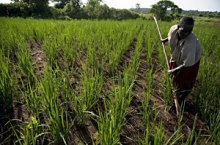
Natural Justice's Gino Cocchiaro met with Life Africa Trust, Kivulini Trust and the Marsabit Accountability Forum in Nairobi, Kenya on 14 February. The meeting was to plan the two-year programme, supported by the GEF Small Grants Programme, that is being coordinated by the organisations to support the Borana and Samburu pastoralist communities to strengthen community governance systems through the development of community protocols with the aim of enhancing resource management and securing community land. Throughout the project Natural Justice will partner with Kenyan lawyers to build the capacity of the Borana and Samburu to proactively claim their resource and land rights.
Showing posts with label Land Tenure Security. Show all posts
Friday, 15 February 2013
Monday, 11 February 2013
Major Court Victory for Tana River Delta Communities
Posted on 02:49 by Unknown
![]() |
| Photo via www.facebook.com/pages/Kenweb |
In a significant victory for community land rights, the Kenyan High Court Judge Mumbi Ngugi has ruled that all land use plans for the Tana River Delta must be developed with the full participation of local communities. The Court also ordered that the Tana and Athi Rivers Development Authority must share current short and long term land use plans and that plans will be periodically reviewed. The ruling is a major triumph as tens of thousands of hectares of multi-use floodplain would have been converted for sugar cane production under the current plan and many residents of the Delta were to be removed.
The case was brought by representatives of farmers, fishermen, pastoralists and conservation groups in the Tana River Delta and sought to halt large-scale commercial developments in the Tana River Delta until a master plan was developed. They were supported by the Kenya Wetlands Biodiversity Research Team with funding from the East African Wildlife Society and Nature Kenya.
Posted in Africa, Community Land Rights, Consultation, FPIC, Kenya, Land Tenure Security, Tana River Delta
|
No comments
Tuesday, 5 February 2013
RRI Reports on Secure Land Tenure
Posted on 05:51 by Unknown
“Landowners or Laborers: What choice will developing countries make?” considers the implications of policies, especially in Africa, that seek rapid development by ceding control of land and resources to external actors. It contrasts these policies with the successes of China and Brazil, which have achieved advances through establishing local property rights rather than undercutting them. It further summarises the state of resources and rights globally, and identifies the key choices and challenges faced by developing countries in 2012. The report can be downloaded here.
“The Financial Risks of Insecure Land Tenure: An Investment View” considers the assumption that cheap land can be acquired to derive high profits easily. The report challenges this view, arguing that exploiting land with disputed tenure rights leads to significant risks. The paper can be downloaded here.
Posted in Community Land Rights, Green Economy, Land Grabbing, Land Tenure Security, RRI
|
No comments
Wednesday, 30 January 2013
Landmark Ruling Against Indigenous Title in Guyana
Posted on 22:54 by Unknown
| Via www.forestpeoples.org |
The High Court of Guyana has controversially ruled in support of a mining concession on titled Indigenous lands, setting a dangerous precedent for the already marginalised Indigenous communities of Guyana. The case was brought by residents of Isseneru village who received title over the land in 2007 in terms of the Amerindian Act of 2006. The court held that as the mining permits were received before the Act came into operation they were not bound by its provisions.
In a press statement, the Isseneru Village Council stated that they are “deeply disappointed and worried with this ruling and what it means to our village and to Amerindian communities in general. On the ground it has serious environmental and social impacts for us. The miners have, for example, brought with them problems related to drugs and prostitution. At the higher level, we feel that when the High Court tells us that we have no rights to decide and control what takes place on our land, then the land is not ours.…Just Friday, when inquiring at the office of the GGMC [Guyana Geology and Mines Commission], we learnt that our whole land is covered with mining concessions. Yet, the government has not informed us about this.”
Thursday, 24 January 2013
Namati Hiring
Posted on 22:31 by Unknown
Natural Justice-partner Namati is hiring! Namati, which develops, implements and evaluates models for delivering quality legal aid at scale, has three positions open: Director of Finance and Administration; Director of Communications and Advocacy; and Director of Research and Evaluation. Completed applications should be emailed to employment@namati.org by January 31, 2013.
FAO Journal on UN Guidelines on Tenure of Land, Fisheries and Forests
Posted on 02:23 by Unknown
Posted in FAO, Food Security, Forestry Resources, Forests, Land Tenure Security, Sustainable Agriculture, UN
|
No comments
Tuesday, 8 January 2013
Maliasili Publication on Community Land Rights in Tanzania
Posted on 03:39 by Unknown
Maliasili Initiatives has released a new publication entitled “Securing Community Land Rights: Experiences and insights from working to secure hunter gatherer and pastoralist land rights in northern Tanzania.” The report, published in partnership with two Maliasili partners in Tanzania, the Pastoral Women’s Council and Ujamaa Community Resource Team, seeks to answer vital questions around how marginalised communities can secure rights over land, resolve land conflicts fairly, and transform natural resource management.
From the release, "the publication, which looks at local examples of these global challenges, combines a synopsis of the political economy of land rights in Tanzania, on-the-ground case studies by two of Maliasili Initiatives’ partners in Tanzania – the Pastoral Women’s Council (PWC) and Ujamaa Community Resource Team (UCRT) – and insights from a one-day learning workshop. As part of its work to strengthen its partners’ capacity and to advance innovative and effective approaches to sustainable development in Africa, Maliasili Initiatives facilitated the learning event with PWC and UCRT to share and reflect upon their respective efforts to secure land rights, learn from each other in Tanzania and build on their achievements moving forward."
Monday, 7 January 2013
Introducing the Land Matrix Project
Posted on 00:58 by Unknown
The International Land Coalition, together with several international research institutes and development partners, has launched a ground-breaking new database to track global land deals. The database, entitled the Land Matrix Project, tracks deals made since 2003 in ‘developing’ nations transferring rights to use, control or own land for agricultural production, timber extraction, carbon trading, mineral extraction, conservation, and tourism. According to the press release, the Land Matrix Project “encourages citizens, researchers, governments and companies to provide data and improve the quality of and access to data regarding global land deals. The database allows users to access summaries, or conduct in-depth exploration of individual land deals, and it includes a visualization tool. The current version of the visualization tool is in a beta form, and feedback is encouraged. It presents visuals on the dynamics of transnational land deals, allows users to visualize relationships between investors and countries, and provides detail on deals across sectors.”
Friday, 16 November 2012
1st Africa Land Forum - Yaoundé Declaration
Posted on 08:00 by Unknown
In recent years, the demand for productive land has surged as a result of global food and financial crises, as well as increasing concerns about energy security. In many countries, carbon sequestration as a response to climate change has also contributed to land pressure. This has rendered land an increasingly disputed and commoditised resource, compromising rural people’s access to, and control over, land. Indigenous communities have been particularly vulnerable to these pressures as many in Africa are pastoralists and hunter-gatherers and the land they occupy and depend on for their livelihoods is often perceived as empty. In this context, the First Africa Land Forum, themed “Securing the land rights of indigenous people and rural communities,” was held in Yaoundé, Cameroon from 7-8 November, 2012. The forum was organised by the Africa Platform of the International Land Coalition (ILC) and hosted by the Mbororo Social and Cultural Development Association (MBOSCUDA). Over 95 participants from 22 countries, representing indigenous and non-indigenous organisations, attended. The forum culminated in the drafting and signing of the Yaoundé Declaration.
The declaration identifies many challenges and issues emerging in the African context. The land rights of women are still limited by existing African patriarchal systems. Laws and policies often fail to recognise and protect the land rights of indigenous and minority populations. Land tenure is under pressure as a result of population growth and climate change. Low literacy on land laws by citizens, a lack of land laws published in local languages, and complex land administration systems make it difficult for many to secure their land rights. The commodification and privatisation of land has led to conflict and has undermined customary land tenure systems. In addition, the creation of national parks and protected areas continues to displace marginalised populations.
The declaration seeks to address these challenges by encouraging sustainable and equitable land governance systems; the registration of collective rights over the commons, including grazing lands; wider participation in decision-making over land; the harmonisation of customary law and legislation so that women and men have equal rights to control and own land and natural resources; recognition for small-scale producers in the development of national strategies for food security and rural development; and fair and accessible land conflict resolution mechanisms, particularly where land and natural resources are shared by indigenous peoples and others.
Wednesday, 7 November 2012
International Conference on Heart of Borneo Initiative
Posted on 06:41 by Unknown
![]() |
The proposed Heart of Borneo boundary (in yellow). Courtesy of WWF-Malaysia. |
The island of Borneo is one of the world's major biodiversity hotspots, with thousands of plant and animal species found nowhere else on earth. It is politically divided into the Malaysian states of Sabah and Sarawak, the Indonesian provinces of West, Central, South, and East Kalimantan, and the state of Brunei Darussalam. In 2007, the three national governments signed the Heart of Borneo Declaration, a unified conservation vision for "maintaining Bornean natural heritage for the benefit of present and future generations". The Heart of Borneo initiative, which is facilitated by the Worldwide Fund for Nature-Malaysia (WWF-Malaysia), aims to protect 22 million hectares of the largest contiguous forest in Southeast Asia through effective management of forest resources and a network of protected areas, productive forests, and other sustainable land uses.
From 6-7 November, Holly Shrumm (Natural Justice) attended an international conference entitled "Heart of Borneo +5 and Beyond: Shaping and Nurturing Sabah's Future Together". Held in Kota Kinabalu, Sabah, the conference was organised by the Sabah Forestry Department and co-hosted by a range of other government agencies and non-governmental organisations, including the Sabah Biodiversity Centre, Partners of Community Organisations in Sabah (PACOS Trust) and Land Empowerment Animals People (LEAP).
The first session on global perspectives on conservation included a diverse group of presenters, most notably, on renewable energy (Dr. Daniel Kammen, Energy and Resources Group, University of California-Berkeley), on the connections between people and forests (Dr. Tint Lwin Thaung, Executive Director, The Centre for People and Forests), and on the drivers of deforestation (Rhett Butler, founder of Mongabay.com).
The second session introduced a new and complementary initiative called "Forever Sabah", which aims to transform Sabah's current trajectory into a diversified, conservation-based green economy. The multi-stakeholder panel was moderated by Darrel Webber (Secretary General, Roundtable on Sustainable Palm Oil) and included interventions from Sam Mannan (Director, Sabah Forestry Department), Cynthia Ong (LEAP), Anne Lasimbang (PACOS Trust), Dr. Glen Reynolds (the Royal Society's South East Asia Rainforest Research Programme), Jeffrey Horowitz (Avoided Deforestation Partners), and Abdullah Latiff Mohamad (WWF-Malaysia).
The bulk of the rest of the conference consisted of breakout sessions (which included presentations and open discussions about next steps for Heart of Borneo) on the following five themes: forests and biodiversity; agriculture and plantations; infrastructure and energy development; community development; and tourism. When the groups presented their outcomes in plenary, a common thread throughout - bolstered by strong representation of Indigenous community members from across Sabah - was the need to recognise Native Customary Rights and land title and to ensure participation of Indigenous peoples and local communities in the Heart of Borneo design, implementation, and monitoring and evaluation process.
Thursday, 25 October 2012
Major Conference on Land Grabbing
Posted on 03:47 by Unknown
![]() |
| Via www.cornell-landproject.org/ |
One paper considered land tenure security amongst the Boni community of Lamu County, Kenya, a community participating the Lamu biocultural community protocol process that Natural Justice is supporting. The paper was presented by Abdirizak Arale Nunow and is entitled "The Displacement and Dispossession of the Aweer (Boni) Community: The Kenya Government dilemma on the new Port of Lamu." The paper is based on "on-going research that is aimed at establishing and documenting the extent of displacement of Lamu communities, particularly the minority Boni, by the development of the new Port of Lamu with a view to recommending policy measures that may contribute towards the amelioration of the problem."
Thursday, 18 October 2012
Applications Open for PLAAS Post-Graduate Diploma
Posted on 02:04 by Unknown
Courses will consider structural poverty and marginalised livelihoods in southern African agro-food systems, the political economy of land and agrarian reform in southern Africa, the economics of farming and food systems, and the social and ecological dimensions of ecosystems management.
Applications are due on 31 October, 2012. Find out more about the programme and how to apply here.
Friday, 5 October 2012
Oxfam Briefing Note on Land Purchases in 'Developing' Nations
Posted on 11:14 by Unknown
| Via www.oxfamblogs.org |
As vast swathes of land in ‘developing’ nations are purchased by foreign investors, Oxfam has prepared a carefully researched briefing note on the impact of these purchases. The briefing note highlights the fact that almost two-thirds of the land purchased from 2000-2010 was purchased in nations with serious hunger challenges while two-thirds of foreign purchasers intend to export everything produced on the land.
The note emphasises that Oxfam does not oppose investments in agriculture, especially when they target smallholder producers, but notes that “the unprecedented rush for land has not been adequately regulated or policed to prevent land grabs. This means that poor people continue to be evicted, often violently, without consultation or compensation.” The note concludes by urging the World Bank to temporarily freeze investments involving large-scale land deals until it can review “advice to developing countries, help set standards for investors, and introduce more robust policies to stop land grabs.”
Posted in Land Tenure Security, Oxfam, Publications, Sustainable Agriculture, World Bank
|
No comments
Tuesday, 7 August 2012
Joint Submission on Programme of Work on Article 8(j)
Posted on 05:38 by Unknown
The Forest Peoples Programme, Natural Justice and 24 other Indigenous peoples’ and community-based organisations and supporting NGOs made a joint submission to the Secretariat of the Convention on Biological Diversity (CBD) concerning the further development of the Plan of Action for customary sustainable use as a new major component of the revised Programme of Work on Article 8(j) and Related Provisions. The submission suggests that the new component addresses secure land, resource and tenure rights as a fundamental condition for effective customary sustainable use of biological resources.
Overall, the submission states that the draft Plan of Action should encourage Parties to the CBD to:
- Take necessary measures to secure indigenous peoples’ and local communities’ territories and land, resource and tenure rights;
- Promote and support stewardship, governance and management by indigenous peoples and local communities;
- Ensure that laws, policies, and decision-making processes at all levels appropriately recognize and respect customary laws, institutions, worldviews, resource management practices, and traditional knowledge, languages, educational systems, and occupations;
- Review, revise, enact, and implement laws and policies at all levels in accordance with the ecosystem approach and with the full and effective participation and free, prior and informed consent of indigenous peoples and local communities; and
- Respect and apply the right of free, prior informed consent of indigenous peoples and local communities in all actions that may affect their territories, lands and waters (including and inland, coastal and marine).
Tuesday, 31 July 2012
Siu Community Petition on Lamu Land
Posted on 01:22 by Unknown
The Siu community in Lamu, Kenya, have taken the step of developing and signing a petition, presented to the Kenyan National Assembly on 21 June 2012, on the irregular allocation of land in Lamu. The petition, signed by 294 members of the Lamu community states:
"We, the undersigned citizens of Kenya who are residents of Siu Town in Lamu and squatters, draw the attention of the House to the following:
That aware that a committee with a membership of seven people was established in Lamu; whereas the committee was created to facilitate land re-settlement of all landless people in the area, on the contrary, the committee has allocated most of the land to members themselves, their family members, relatives and friends as well as foreigners at the expense of more than 300 residents who are landless;
whereas the committee was to facilitate the landless to be resettled, there has emerged an agency operating for rich people from Lamu and other areas willing to buy land from the region at some fee;
whereas the land from Kwang’ombe Area which is within Siu Location was allocated to Rasini residents of Faza Locations and such complaints were made to the office concerned, but nothing has been done to date.
Therefore, your humble petitioners pray that Parliament and the Committee concerned, investigates the matter with a view to establishing genuine squatters and issuance of title deeds in an equitable manner to the residents and cancellation of all title deeds which have been irregularly issued and your petitioners will ever pray."
Submission of the petition encouraged discussion within the Assembly, with recognition by members that the people of Lamu need protection from land speculators.
Friday, 29 June 2012
New Namati Report on Community Land Registration
Posted on 03:51 by Unknown
Through the process, communities succeeded in addressing land disputes, improved local governance, enhanced local conservation of natural resources, and strengthened the rights of women and other marginalised groups. Based on these lessons, the report concludes that community land registration efforts should include three processes: the technical work of mapping and titling community land, the peace-building process of resolving land disputes, and the establishment or strengthening of local governance mechanisms. Moving forward, Namati will use these lessons in strengthening its Community Land Protection Program.
Monday, 11 June 2012
Borana BCP Training
Posted on 06:39 by Unknown
From 5-7 July, Natural Justice and Kivulini Trust facilitated a biocultural community protocol (BCP) training workshop for the Borana pastoralist community of the Waso Rangelands, Kenya. The increase in development projects, wildlife conservation areas and influx of other groups in Waso has contributed to the loss of the Borana’s traditional lands and diminished grazing areas for their livestock. This continued loss has led to a slow decline in their traditional institutions, customs and norms as members of the community are forced to choose other livelihood options. This change has also negatively impacted the biodiversity in the area, which was conserved and sustainably used by the communities through their traditional pastoralist practices.
The BCP training in Waso was attended by a number of the community members, including elders, women, youth and NGOs supporting the community. The BCP process, or Fin Jiru Gumi Waso (Wellbeing of the Waso Community in KiBorana), will combine with a number of ongoing projects in the region which seek to protect the community’s resources and culture. The process will highlight the community’s customary laws and norms around biodiversity conservation, inform the community of their relevant international and national biocultural rights, establish representative bodies to dialogue with government or private enterprises interested in utilizing the resources and/or traditional knowledge on their traditional lands, and create a platform for discussion with neighbouring communities in the interest of peacebuilding. This initiative is supported by the Christensen Fund.
Final FAO Voluntary Guidelines on Tenure
Posted on 02:45 by Unknown
| Farmer in Uganda. Photo via fao.org |
The Committee on World Food Security (CFS) endorsed the ‘Voluntary Guidelines on the Responsible Governance of Tenure of Land, Fisheries and Forests in the Context of National Food Security’ on 11 May. The process of developing the guidelines was initiated by the Food and Agriculture Organisation (FAO) of the United Nations in 2009 and was finalised by CFS lead negotiations involving governments, civil society, the private sector, international organisations and academia. CFS chairperson Yaya Olaniran described the guidelines as "the product of a three year, inclusive process of consultations and negotiations that brought together many stakeholders and ensured that a wide range of voices were heard…The result is that we have a meaningful series of principles and practices that everybody — countries, the private sector, farmers, civil society — can stand behind and support, and that will work out in the real world."
The guidelines encourage increased recognition of informal tenure systems, ensuring tenure administrative systems are affordable and accessible, managing restitution for those illegally evicted from their lands in the past, ensuring the rights of indigenous communities, increasing transparency in agricultural investments, supporting effective and equitable dispute resolution around land tenure, and addressing increased urbanisation. Looking forward, implementation will depend upon governments which participated in the negotiations.
Sunday, 13 May 2012
Community Meeting in Bwabata Park, Namibia
Posted on 21:50 by Unknown
Through its African Biocultural Community Protocol (BCP) Initiative, Natural Justice travelled to the Bwabwata National Park in West Kaprivi, Namibia during the week of 7th May to meet with residents. Proclaimed a national park in 2007, Bwabwata is the largest of the five protected areas in northeastern Namibia and is bordered to the north by Angola and the south by Botswana. Bwabwata consists of high number of large mammals that are both rare and of important economic value. The grasslands provide habitat for roan, sable and tsessebe along with an important bird habitat. Bwabwata has three core areas designated for special protection and controlled tourism. It also has a large multiple use area zoned for community-based tourism, trophy hunting, human settlement and development by the residents of the community. The Bwabawata resident community is 80% Kwhe. The Kwhe are generally allowed to live sustainably with the environment and natural resources within the park.
In the absence of current legislation formally recognizing the rights of park residents, the Namibian government does recognize the Karamachan Association as the ‘appropriate representative body for the community of residents of the Bwabwata within the context of tourism development and natural resource management involving the community’.
In collaboration with locally based NGO Integrated Rural Development and Nature Conservation (IRDNC) and the Karamachan Association, Natural Justice held consultations over two days with community members in which representation in the park, loss of culture and traditional knowledge, possible livelihood projects including access and benefit sharing, and the community’s vision for the future were all discussed. Natural Justice will continue to work with the community, Karamachan Association and IRDNC to assist in the development of a Bwabwata National Park residents BCP, which they hope to use to address some of their concerns and support their vision for the future.
Monday, 30 January 2012
Exploring Native Land Rights in Sabah
Posted on 16:56 by Unknown
Harry Jonas and Holly Shrumm (Natural Justice) attended a symposium entitled "Sabah Native Land Rights: Issues, Challenges and the Way Forward". Chaired by Dr. Jacqueline Pugh-Kitingan (UMS Kadazandusun Chair), it was hosted by the Universiti Malaysia Sabah (UMS) School of Social Sciences from 30-31 January in Kota Kinabalu, Malaysia. The opening keynote was delivered by YAA Tan Sri Richard Malanjum (Chief Justice, High Court of Malaysia). Highlights of the paper presentations included:- Overview of Native Customary Land Laws in Malaysia (Dr. Ramy Bulan, Centre for Legal Pluralism and Indigenous Law, University of Malaya)
- Governance of Customary Land and Natural Resources in Sabah (Datuk Osman Jamal, Director, Sabah Lands and Surveys Department)
- Land Rights, Native Rights, and Human Rights (Tan Sri Simon Sipuan, Former Vice Chairman, Human Rights Commission of Malaysia)
- Selection of Village Headmen in Sabah (Dr. Paul Porodong and Dr. Gaim Lunkapis, UMS)
As in many former British colonies, the legal landscape in Sabah consists of a mosaic of statutory, common, and customary law. Drawing on a burgeoning global jurisprudence in support of Indigenous peoples' rights, many presenters called for greater legal pluralism, effective reform of decades-old legislations, and a national tribunal to address violations and the backlog of an estimated 300 000 native title applications.
Subscribe to:
Posts (Atom)


+(640x425).jpg)