Ict Support

  • Subscribe to our RSS feed.
  • Twitter
  • StumbleUpon
  • Reddit
  • Facebook
  • Digg
Showing posts with label LAPSSET. Show all posts

Sunday, 6 October 2013

Save Lamu Forum on Human and Environmental Rights Monitoring

Posted on 04:06 by Unknown
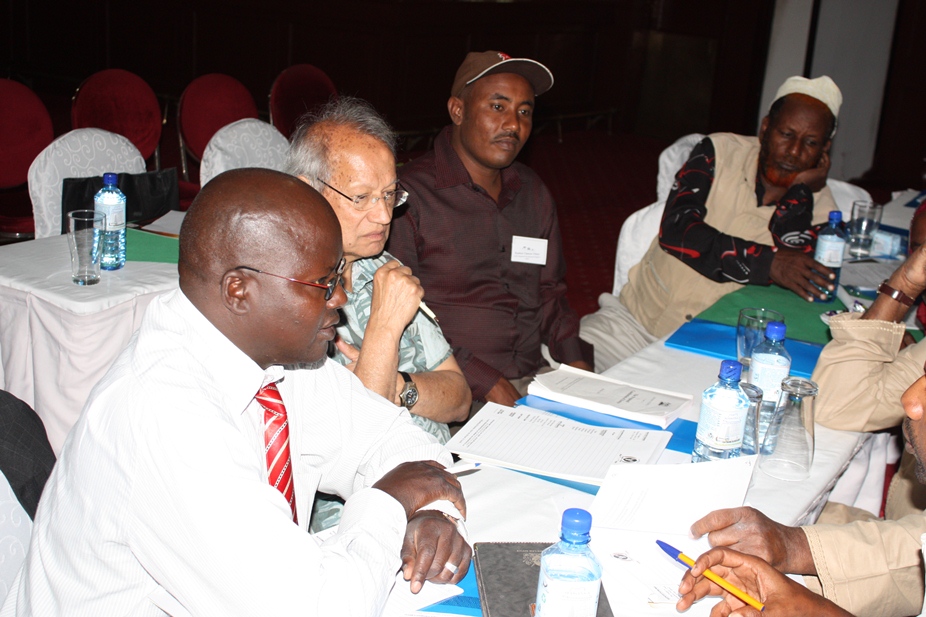
On Saturday October 5th Steph Booker and Maya Sikand from Natural Justice presented at a Forum hosted by Save Lamu on Human and Environmental Rights Monitoring in Lamu Town. Participants of the meeting included members of the Lamu community from the Islands and Mainland as well as representatives from communities along the LAPSSET corridor. 

Natural Justice gave a presentation on 'What is Human and Environmental Rights Monitoring?'. Participants then separated into groups according to region, and began documenting changes they have witnessed in their areas. This was an important first step in collecting information, and understanding what sort of questions are asked during human rights monitoring. It is hoped that this forum is the beginning of a wider effort at human rights monitoring training for community organisations along the LAPSSET corridor. Such documentation is an important tool when making a case about human or environmental rights abuses against companies or the government.

Presentations were also made by Sarah Singh from Accountability Counsel and Mohammed Ramadhan from the Kenyan National Commission on Human Rights on national and international grievance mechanisms. Save Lamu have initiated creative ways to bring all the information about changes in the communities to one central place, for example through text messages.
Read More
Posted in Grievance Mechanisms, Human and Environmental Rights monitoring, LAPSSET, Save Lamu | No comments

Friday, 27 September 2013

Indigenous Pollinators: Honey and Harmony

Posted on 04:52 by Unknown
From the 25-26th of September one of Natural Justice’s partner organizations in Kenya, Kivulini Trust co-hosted an Indigenous Pollinators Network Workshop in Nairobi, together with the FAO and Indigenous Partnership for Agrobiodiversity and Food Sovereignty.

The objective of the workshop was to establish a network of indigenous communities knowledgeable of and supportive towards pollinators. A similar workshop was held last month in India, where an Indigenous Pollinators Network has been formed. Through such a network communities can share best practices and provide support to each other. Another goal of the workshop was to create awareness of the many different pollinators that exist, and their importance.
What is a pollinator?
The workshop commenced with a presentation by pollination expert Dr. Mary Gikungu from the National Museums of Kenya on what is a pollinator? Most of us think only of bees – and honeybees at that – when we hear the word pollinator. In fact, honeybees account for only a tiny fraction of the pollinators that exist – there are many other species of bees, as well as birds, butterflies, bats and other insects that provide the world with essential pollination services. In case it has been a while since you took a biology class – pollinators are important because without them most plants would not be able to reproduce – which would mean no food, or other plant materials, so important for humans and the environment.
Attendees of the workshop included indigenous communities from across Kenya, such as the Enderois, the Ogiek and the El Molo communities. There was someone working with the Boni community along the coast, women from West Pokot and several people who had come from as far away as Marsabit – a full two day journey away. The workshop created a very good space for these community members to interact and discuss issues together, facilitation was bilingual in Kiswahili and English, there were plenty of break-out group sessions and the attitude amongst everybody present was that all the participants have a lot of valuable knowledge to share, which created a space where everybody felt comfortable speaking.

Most participants had not thought much about pollinators other than honeybees before. This presented a challenge when discussing a question such as ‘What are other pollinators you see in your area?’ Perhaps there was a communication difficulty in explaining the question, or the word ‘pollinator’, which is new to most people. Or maybe people understandably notice bees more, and not other pollinators, because bees produce honey. Certainly, all of the community members present possessed rich knowledge of their environments. Whether or not this knowledge is communicable through Western scientific terms like ‘pollinator’ is a challenge. Perhaps in using these concepts as the basis for a network we are already shifting the way knowledge is conceived.

All the attendees were very knowledgeable about beekeeping in their different environments. It was exciting to see the connections form as a participant spoke about a tree in his region that bees prefer, and someone else from another place recognized the description but knew the same tree by another name in her own language. She shared with the other participants useful information about that tree that others didn’t know. Beekeeping is important for all of these communities as income generation, a source of nutrition and medicine and for symbolic purposes. For example, for many a cup of honey is included in bride payments.

The Ogiek community brought up Biocultural Community Protocols as a tool for the communities present to protect their knowledge about bees and other pollinators. They shared with the others what a BCP is and how it can be of use in documenting and protecting indigenous knowledge and practices. This led to a discussion on ‘mapping your own lands before someone else does’, particularly for the communities to be affected by the LAPSSET project. Many participants articulated that a challenge they face is access to land. Since mapping land and community resources was identified as a useful future exercise, BCPs might be of further use here as well.

Read More
Posted in biocultural community protocols, indigenous and traditional knowledge, Kivulini Trust, LAPSSET, pollinators | No comments

Saturday, 16 February 2013

LAPSSET Dialogue Meeting in Nairobi

Posted on 06:17 by Unknown
On 15 February 2013, Gino Cocchiaro (Natural Justice) attended a stakeholder dialogue meeting on the on-going plans and sharing of updates on the implementation of the Lamu Port and Lamu Southern Sudan-Ethiopia Transport Corridor (LAPSSET) in Nairobi, Kenya. The meeting was facilitated by Save Lamu and included over 50 participants from communities affected by LAPSSET, national civil society organisations, multinational organisations and Kenyan government agencies. The meeting resulted in the drafting and adoption of a statement on the aspirations and concerns of communities affected by LAPSSET projects. 

From the statement, “As communities that have long been disenfranchised, and that are in dire need of development, we commend the Kenyan government for its commitment to upgrading and modernising the country’s infrastructure as per the proposed Lamu Port, South-Sudan, Ethiopia Transport (LAPSSET) Corridor outlined in the Government of Kenya’s 'Vision 2030'. We appreciate the need for connecting communities along the northern corridor to facilitate national and international trade. However, we are deeply concerned by the lack of community consultation and transparency in the implementation of the project and hereby wish to express our concerns.” 

Read more about the meeting here. Download the community statement here.
Read More
Posted in Africa, Kenya, Lamu, LAPSSET, Major Infrastructure, Our Work, Save Lamu | No comments
Older Posts Home
Subscribe to: Posts (Atom)

Popular Posts

Categories

  • Aarhus Convention
  • ABS
  • ABS Capacity Development
  • ABS Capacity Development Initiative
  • ABS Focal Points
  • ABS Initiative
  • ABS Intiative
  • ABS Legislation
  • ABS Regulations
  • access and benefit sharing
  • Access to Justice
  • Accountability
  • ACHPR
  • Adaptation
  • Africa
  • African BCP
  • African Biodiversity Network
  • African Caucus
  • African Court on Human and People's Rights
  • African Group
  • African Union Commission
  • agricultural investments
  • Agriculture
  • Aichi Biodiversity Targets
  • AICHR
  • AIPP
  • ALDAW
  • ALF
  • Alien Tort Statute
  • Amazon
  • ARI-BCP
  • ARI-BCPs
  • Article 8j
  • Artisanal Fishing
  • ASEAN
  • Ashoka Fellowship
  • Asia
  • AU
  • Australia
  • BCP
  • BCP Initiative
  • BCP Toolkit
  • BCPs
  • BCRs
  • Benefit sharing
  • Berne Declaration
  • Bhutan
  • bio-cultural community protocols
  • biocultural community protocols
  • Biocultural Dialogues
  • Biocultural Diversity
  • Biocultural Rights
  • Biodiversity
  • Biodiversity Conservation
  • Biofuels
  • BIOPAMA
  • Biopiracy
  • bioprospecting
  • Biotrade
  • Borana
  • Borneo Conservancy Initiative
  • Borneo Eco Film Festival
  • Brazil
  • Bushbuckridge
  • Business
  • Business and Human Rights
  • Cambodia
  • CAO
  • Capacity Development
  • Carol Rose
  • CBD
  • CBD Alliance
  • CBNRM
  • CCPCJ
  • CEDAW
  • CFR
  • Childrens Rights
  • Chinese Ministry of Commerce
  • CIFOR
  • CIKOD
  • Climate change
  • Climate Change Adaptation
  • Commons
  • Communications
  • Community Empowerment
  • community film-making
  • community forest resources
  • Community Governance
  • Community Land Rights
  • Community Protocols
  • community resource rights
  • Community Rights
  • community-based conservation
  • conflict prevention
  • Conservation
  • Conservation Governanace
  • Consultation
  • Convention on Biological Diversity
  • Convention to Combat Desertification
  • COP 11
  • COP 18
  • COP11
  • corporate liability
  • Costa Rica
  • CSR
  • Customary Justice
  • Customary Sustainable Use
  • Design
  • Development
  • development aggression
  • Dialogue
  • Documentation
  • Doha
  • DRC
  • Dusun
  • E-Learning
  • ECCHR
  • ECO
  • Economic Growth
  • Ecosystem Services
  • Ecuador
  • Education
  • Employment
  • EMRIP
  • Endorois Case
  • Energy
  • ENVI
  • Environmental Impact Assessment
  • Environmental Law
  • environmental protection
  • ESPA
  • ETC COMPAS
  • EU
  • Eviction
  • Extractive Industries
  • FAO
  • Farmers' Rights
  • FCPF
  • Finance
  • Financial Sector
  • First Peoples
  • Food Security
  • Ford Foundation
  • Foreign Investment and Cooperation
  • Forest Carbon Partnership Facility
  • Forest Peoples' Rights
  • Forest Rights Act
  • Forestry Resources
  • Forests
  • Forever Sabah
  • FPIC
  • FPP
  • FRA
  • Fracking
  • Francais
  • Friedrich Ebert Stifung
  • Gaia Foundation
  • GCF
  • GDF
  • GEF
  • Gender
  • Genetic Resources
  • GEO
  • GESA
  • Ghana
  • Global Canopy Programme
  • Global Environmental Institute
  • Global Forest Coalition
  • GM
  • GNHRE
  • GPS
  • Green Economy
  • Grievance Mechanisms
  • Growing Forest Partnership Initiative
  • GTCR
  • Gujjar
  • Guyana
  • Harry Jonas
  • Heart of Borneo
  • Heinrich Boell
  • Heritage
  • Heritage Parks
  • Himachal Pradesh
  • Honduras
  • Hoodia
  • Human and Environmental Rights monitoring
  • Human Rights
  • Human Rights Council
  • Hutan
  • IACHR
  • IASS
  • ICCA Consortium
  • ICCAs
  • ICMM
  • ICNP
  • IDLO
  • IEN
  • IFC
  • IFIs
  • IIED
  • IIPFCC
  • IISD
  • ILCF
  • ILO
  • Independent Accountability Mechanisms
  • India
  • indigenous
  • indigenous and traditional knowledge
  • Indigenous Information Network
  • Indigenous Knowledge Systems
  • Indigenous Livestock Breeds
  • Indigenous Peoples
  • Indigenous Peoples Caucus
  • Indigenous Peoples Movement
  • Indigenous Peoples Rights
  • Indigenous Peoples' Rights
  • Indonesia
  • Infrastructure
  • Institute of Marine & Environmental Law
  • Intellectual Property
  • Inter-America
  • Intercontinental Cry
  • International
  • International Advocacy
  • International Council on Mining and Metals
  • International Journal of the Commons
  • International Land Coalition
  • IPACC
  • IPBES
  • IPR
  • IPRs
  • IUCN
  • IUCN WCC
  • IWGIA
  • James Anaya
  • JOAS
  • judgement
  • Just Conservation
  • Justice
  • Karoo
  • Katiba Institute
  • Kenya
  • Kenyan National Land Commission
  • Khoe
  • Khoikhoi
  • KhwaTtu
  • Kinabalu Park
  • KIRDTI
  • Kivulini Trust
  • Knowledge sharing
  • KRAPAVIS
  • Kukula
  • Kyoto Protocol
  • Lamu
  • Land Grabbing
  • Land investments
  • Land Matrix Project
  • Land Tenure Security
  • Land Title
  • LAPPSET
  • LAPSSET
  • Latin America
  • LEAP
  • LED
  • Legal Aid
  • Legal Empowerment
  • Legal ngo
  • Legal Research
  • Legal Review
  • Legal Submissions
  • Livelihoods
  • Livestock keepers
  • Livestock Keepers' Rights
  • Living Convention
  • Local Communities
  • Locally Controlled Forestry
  • low-cost solutions
  • LPP
  • LPPS
  • Madagascar
  • Major Infrastructure
  • Malaysia
  • Maldhari
  • Maliasili Initiatives
  • Manu National Park
  • manual
  • Maori
  • MAT
  • Mau Forest
  • Messaging
  • Mexico
  • Millennium Development Goals
  • Mining
  • Ministry of Environmental Protection
  • Minority Rights
  • Mitigation
  • Mokgola community
  • Mozambique
  • MSP
  • Multistakeholder Processes
  • Nagoya Protocol
  • Nahuru
  • Nama
  • Namati
  • Namibia
  • National Environmental Management
  • National Geographic
  • Natural Capital
  • natural resources
  • NBSAPs
  • New York
  • New Zealand
  • NKC
  • Norton Rose Fullbright
  • NRM
  • OAS
  • Ocean Grabbing
  • Oceania
  • Odisha
  • OECD
  • Ogiek Community
  • Online Eduction
  • Open Society Foundation in Southern Africa
  • OSISA
  • Ostrom
  • Our Work
  • Oxfam
  • Pacific Region
  • PACOS
  • Palawan
  • Palm Oil
  • Pan-African Workshop
  • Paraguay
  • Participatory Mapping
  • participatory video
  • Pastoralist
  • Pastoralist Rights
  • Peru
  • Philippines
  • Photography
  • phyto-trade
  • PIC
  • Platinum mining
  • pollinators
  • post-2015 agenda
  • Poverty
  • Programme of Work on Protected Areas
  • Protected Areas
  • Publications
  • PULP
  • Puppet theatre
  • Rachel Carson Center
  • Raika
  • Rainforest Foundation Norway
  • Ramsar
  • REDD
  • REDD+
  • Research
  • Resilience
  • resource curse
  • Resource Rights
  • Rio +20
  • ROAPE
  • Rooibos
  • RRI
  • RSPO
  • Sabah
  • Sacred Natural Sites
  • Sacred Sites
  • Safeguards
  • Samburu
  • San
  • Sariska Tiger Reserve
  • Save Lamu
  • Sawit Watch
  • SBI
  • SBSTA
  • SBSTTA
  • Scientific Consensus Statement
  • SEI
  • Self-determination
  • SGP
  • Small-Scale Fishing
  • SNS
  • Soil
  • SOMO
  • South Africa
  • South-South Exchange Mechanism
  • Southeast Asia
  • Southern Africa
  • spatial planning
  • Special Rapporteur
  • Srishti
  • State Department of Tribal Development & Forests
  • stewardship rights
  • Strategic Litigation
  • SUARA
  • SUHAKAM
  • Sustainability
  • Sustainable Agriculture
  • Sustainable Development
  • Sustainable Development Goals
  • SWOP
  • Tana River Delta
  • Tanchara
  • Tanzania
  • Target 11
  • TCEs
  • TCF
  • tenure
  • The Christensen Fund
  • The Commons
  • The Right to Responsibility
  • TK
  • TK Commons
  • Toolkit
  • Traditional Healers
  • Traditional Justice
  • Traditional Knowledge
  • Transnational litigation
  • Transparency
  • Treasure the Karoo Action Group
  • TRRs
  • UEBT
  • UN
  • UN Declaration on the Rights of Indigenous Peoples
  • UN Global Compact
  • UN Guiding Principles
  • UN Human Rights System
  • UN working group on Human rights
  • UN-REDD
  • UNDP
  • UNDRIP
  • UNEP
  • UNESCO Biosphere Reserve
  • UNFCCC
  • UNGA
  • UNHRS
  • United Nations Permanent Forum on Indigenous Issues
  • United States
  • UNPFII
  • UNU-IAS
  • US Secretary of the Treasury
  • Vanuatu
  • Venezuela
  • Vidarbha LIvelihood Forum
  • Vidarva
  • Video
  • Voluntary Principles
  • Volunteer
  • WCMC
  • Wetlands
  • Wild 10
  • wildlife protection amendment bill 2013
  • WIPO
  • women
  • Women's Rights
  • Working Group on HR and TNCs
  • World Bank
  • World Indigenous Network Conference
  • World Wilderness Congress
  • WWF
  • ZAMI
  • ZCC
  • ZELA

Blog Archive

  • ▼  2013 (198)
    • ▼  November (10)
      • Warsaw Climate Change Conference
      • Heart of Borneo and Forever Sabah
      • ICCA meeting for Southern and East Africa discusse...
      • New Research Questions Effectiveness of RSPO Stand...
      • Africa Regional Symposium for Community Land and N...
      • National Conference on Indigenous Peoples' Land Ri...
      • International Workshop on ICCAs in Thika, Kenya
      • First Peoples release Indigenous Rights Risk Report
      • South-South Exchange Mechanism
      • Natural Justice Attends Side Event During UN GA on...
    • ►  October (20)
    • ►  September (18)
    • ►  August (9)
    • ►  July (14)
    • ►  June (16)
    • ►  May (20)
    • ►  April (22)
    • ►  March (29)
    • ►  February (20)
    • ►  January (20)
  • ►  2012 (221)
    • ►  December (8)
    • ►  November (35)
    • ►  October (29)
    • ►  September (21)
    • ►  August (23)
    • ►  July (18)
    • ►  June (15)
    • ►  May (22)
    • ►  April (13)
    • ►  March (11)
    • ►  February (15)
    • ►  January (11)
  • ►  2011 (88)
    • ►  December (8)
    • ►  November (6)
    • ►  October (13)
    • ►  September (10)
    • ►  August (11)
    • ►  July (13)
    • ►  June (14)
    • ►  May (10)
    • ►  April (3)
Powered by Blogger.

About Me

Unknown
View my complete profile