Ict Support

  • Subscribe to our RSS feed.
  • Twitter
  • StumbleUpon
  • Reddit
  • Facebook
  • Digg
Showing posts with label Extractive Industries. Show all posts

Friday, 1 November 2013

First Peoples release Indigenous Rights Risk Report

Posted on 07:33 by Unknown
First Peoples Worldwide
First Peoples have released their Indigenous Rights Risk Report. The report analyses 52 US-based extractive companies and 370 oil, gas, and mining sites that are situated on or near indigenous peoples' lands. Given findings that 92% of sites posed a medium to high risk to shareholders, the report proposes a new risk assessment tool. The report documents how conflicts or tensions between companies and indigenous communities can cause great losses. For example, one company First Peoples analyzed was Southwestern Energy. Protests by activists at one of their sites was costing them $60,000 a day.

Only 5% of the companies analyzed had an indigenous peoples policy, pointing out a serious gap for communities, companies and shareholders. The report warns that the risks of not having an indigenous peoples policy or respecting their rights are continuing to increase as more and more indigenous peoples rights are incorporated into national and international legal frameworks. At the same time, extractive industries increasingly find sites on indigenous peoples lands. The report suggests that the report can be a risk analysis tool and platform for indigenous peoples and investors to work together as shareholders to pressure companies to both respect indigenous peoples rights and maximise shareholder returns. The report is available for download in English here.
Read More
Posted in Extractive Industries, First Peoples, Indigenous Peoples Rights | No comments

Tuesday, 29 October 2013

Mining, Oil and Gas at MindSpeak Business Club

Posted on 02:01 by Unknown
http://basetitanium.com/education-and-media/photo-library
On Saturday October 26th Maya Sikand from Natural Justice attended a public forum in Nairobi about the Voluntary Principles and the growing mining, oil and gas sectors in Kenya. The meeting was hosted by business analyst Aly-Khan Saatchu's monthly business club, Mindspeak. The panel featured Cliff Otega, a Kenyan mining analyst, His Excellency David Angell, Canadian High Commissioner to Kenya, Evelyn Samba, Deputy Secretary to the Kenya National Commission on Human Rights, and Simon Wall, Corporate Affairs Manager of Base Titanium. The meeting drew an audience of over 200 people.

The challenges for the new and growing mining sector in Kenya and the opportunities for guidelines such as the Voluntary Principles were discussed by each of the panelists. Cliff Otega pointed out to a room full of young people hoping to benefit from this new industry, that the extractives industry doesn't actually provide many employment opportunities as it is so capital and machinery intensive. Kenya should not look to this as the sector that will transform the economy for youth. However, all the panelists agreed that the multiplier effects, including infrastructure and services development will bring benefits to the region.
A focus for the meeting was on the Voluntary Principles on Security and Human Rights, a multi-stakeholder initiative involving governments, companies and NGOs, that was founded in 2000. It is the only set of principles specifically guiding the extractive industries in respecting human rights. Currently, several countries, including Canada, are participants, as well as a number of corporations and NGOs. High Commissioner Angell, Chair of the Voluntary Principles from 2011-12 spoke extremely positively of the Canadian government's and corporations' efforts to improve Corporate Social Responsibility programs in the extractives sector. Currently, Canadian extractive companies have over $10 billion invested in East Africa alone.

Many audience members as well as representatives from KNCHR raised questions about whether extractives-led development actually benefits local communities. There was also much discussion on redress mechanisms to actually hold international companies accountable to these lofty principles. The issues of benefit sharing, land acquisition and compensation were also raised as matters Kenyans need to be wary of as the extractives sector expands.

The major case for mining in Kenya discussed was Base Titanium Mineral Sands project in Kwale. This is Kenya's first large-scale, world-class mining investment. Simon Wall from Base Titanium spoke about the company's environmental and social performance that adheres to the highest global standards, particularly as signatories to the Extractive Industries Transparency Initiative. In the 13 year lifespan of the project Base Titanium will put over $1.1 billion into the Kenyan economy, $220 million in direct royalties to the government and the rest as operational costs including food, salaries and services.


Read More
Posted in Extractive Industries, Grievance Mechanisms, Mining, Voluntary Principles | No comments

Thursday, 19 September 2013

James Anaya on the "resource curse" in the global south

Posted on 18:24 by Unknown
Professor James Anaya (United Nations Special Rapporteur on the Rights of Indigenous Peoples) has written an opinion article for Al Jazeera entitled "Is natural resource development a blessing, a 'quick-fix,' or a curse?" Drawing on his experiences as a UN investigator, he argues that the resource curse is alive and well in the global south, with profits from natural resource extraction failing to reach the people and communities who bear the brunt of its environmental and social impacts, and that the heart of the problem often lies in lack of recognition of the rights of the Indigenous peoples and local communities living on the land.

Referencing the community land and resource rights conference currently taking place in Interlaken, he calls on the new UN Sustainable Development Goals to include recognition of land rights, including rights based on traditional use and occupancy, in order to address deep-rooted problems of contested ownership. For more information, please read the Al Jazeera article and download Anaya's thematic report on extractive industries and Indigenous peoples, which was recently submitted to the Human Rights Council.
Read More
Posted in Community Land Rights, Extractive Industries, Human Rights Council, Indigenous Peoples, resource curse, Special Rapporteur | No comments

Friday, 19 July 2013

Pillars in Practice: Multi-Stakeholder Forum on Business and Human Rights in Zimbabwe

Posted on 04:09 by Unknown

On 20 June 2013, Stephanie Booker (Natural Justice) attended the "Pillars in Practice: Multi-Stakeholder Forum on Business and Human Rights" in Zimbabwe, held by Zimbabwe Environmental Law Association (ZELA) in partnership with the Danish Institute for Human Rights (DIHR) and Social Accountability International (SAI).  

"Pillars in Practice" is an 18-month initiative to advance the UN Guiding Principles on business and human rights.  The Project's objective is to "establish the trianing capacity of local civil society partners to sustainably promote and assist companies, governments, trade unions and other non-government organisations in the implementation of the Guiding Principles, to operationalise the "Protest, Respect and Remedy" Framework.

Joined by more than 75 participants from Zimbabwean businesses, government agencies, civil society organisations and communities, the multi-stakeholder forum was an opportunity for participants to be introduced to the United Nations Guiding Principles on Business and Human Rights and for participants to discuss the major issues affecting human rights with respect to mining.  Participants made concrete recommendations for government and business and suggested steps forward for stakeholders in the implementation of the Guiding Principles.  You can read the recommendations here.

More information can be found on the "Pillars in Practice" facebook page, or the Danish Institute for Human Rights webpage here.


Photo: Courtesy of "Pillars in Practice" facebook page.
Read More
Posted in Extractive Industries, Human Rights, Our Work, Southern Africa, UN Guiding Principles, ZELA | No comments

Tuesday, 9 July 2013

Advanced Seminar on the Implementation and Promotion of Indigenous Peoples’ Rights in the Namibia context

Posted on 04:01 by Unknown
Lesle Jansen and Stephanie Booker of Natural Justice presented in Windhoek, Namibia on the topics of indigenous peoples and the environment; post-2015 UN development agenda as well as a situational analysis on extractives industries in Southern Africa. The presentations formed part of a four-day Advanced Seminar on the Implementation and Promotion of Indigenous Peoples Rights in the Namibia context. It was hosted by the University of Namibia in partnership with Open Society Foundation in Southern Africa (OSISA) and the International Labor Organization (ILO). 
The seminar was hosted from 01 – 04 July 2013 with about 30 participants from different sectors ranging from University of Namibia staff and students; civil society; media and government officials. The objectives to the seminar were:
  • To build local knowledge of human rights and the rights of Indigenous Peoples and how this applies to indigenous peoples in Namibia
  • To look at the International Human Rights Framework and the obligations of the Namibian Government to respect, protect and fulfil human rights and the rights of Indigenous Peoples.
  • To achieve a greater awareness, understanding and implementation of relevant policy guidance on indigenous issues, particularly related to effective engagement of indigenous peoples and recognition of indigenous peoples’ rights in development processes
  • To explore the use of human rights indicators to establish/ ensure accountability for the implementation of IPs rights in Namibia.
The theme to the seminar was: The concept of indigenous peoples and legal instruments protecting them. It covered the topics, amongst others (i) Understanding the concept of Indigenous Peoples under international law: A human Rights Approach; (ii) International Norms and Standards relevant to IPs: ILO Convention No 169 and the UN Declaration on the Rights of Indigenous Peoples; (iii) Legal instruments and monitoring mechanisms on indigenous peoples’ rights in the African human and (iv) The recognition of indigenous peoples in Namibia.

Read More
Posted in Extractive Industries, ILO, Open Society Foundation in Southern Africa, OSISA, Our Work, UN Declaration on the Rights of Indigenous Peoples | No comments

Monday, 27 May 2013

United Nations Permanent Forum on Indigenous Issues Enters Second Week

Posted on 23:43 by Unknown
The twelfth session of the United Nations Permanent Forum on Indigenous Issues (UNPFII) is currently taking place at United Nations headquarters in New York City from May 20 to May 31. The UNPFII is an advisory body to the UN Economic and Social Council, which is the UN platform on economic and social issues. The UNPFII brings together Indigenous peoples, governments, UN agencies, NGOs, and other stakeholders in unique fashion to collaborate on issues faced by Indigenous peoples. Natural Justice is attending the UNPFII and undertaking a number of activities, including supporting the Indigenous Peoples of Africa Coordinating Committee (IPACC) and the National Khoi-San Council, as well as launching the second edition of the Living Convention. This year, Mr. Kanyinke Sena, a former IPACC Executive Committee member, has been nominated as the Chair of the UNPFII. 

This session of the UNPFII is billed as a Review Year, and is addressing a number of different issues, including health, education, culture, human rights, and the World Bank. On Thursday, May 23, the UNPFII held a half day on the African region, where, among other things, a study on resilience, traditional knowledge and capacity- building for pastoralist communities in Africa was addressed. Natural Justice also helped in the preparation of statements on the Khoi-San communities as well as the World Bank that were read during plenary sessions of the UNPFII. During the second week, the UNPFII will address, among other issues, a Consolidated report on extractive industries and their impact on indigenous peoples, as well as the future work of the UNPFII.

Read More
Posted in Extractive Industries, Indigenous Peoples, IPACC, NKC, Our Work, United Nations Permanent Forum on Indigenous Issues, UNPFII | No comments

Thursday, 23 May 2013

Natural Justice attends Fracking and Agrarian Transformation Dialogue

Posted on 23:30 by Unknown
On 22 and 23 May 2013, Stephanie Booker of Natural Justice attended the Fracking and Agrarian Transformation Dialogue hosted by the Southern Cape Land Committee (SCLC) in Steytlerville, Eastern Cape.  Attended by 55 community members, farmworkers, local and national non-government organisations, environmental activists, academics and international guests, the dialogue was an opportunity to discuss potential fracking in the Karoo and unite together to form a common viewpoint on fracking.  The objectives of the two-day dialogue were three-fold:
  • To strengthen the voice of local communities who bear the brunt of the impact of fracking on their health and their environment;
  • To develop a coordinated fracking response with a transformative agenda;
  • To link with other national and international initiatives aimed at mobilising and strengthening the voice of people whose lives are impacted upon by mining, oil and gas.
On the first day of the dialogue, presenters discussed the complex context within which the fracking debate takes place in South Africa, as well as particular insights on agriculture and food, the environment and workers' rights.  The second day was spent discussing participation in decision-making, Southern African solidarity, the impacts of fracking on communities around the world, including the U.S. and Europe.

A clear statement on fracking was agreed to by participants and this can be found here.

Natural Justice thanks Southern Cape Land Committee and the participants of the dialogue for an insightful meeting.
Read More
Posted in Extractive Industries, Fracking, Karoo, Our Work, Southern Africa | No comments

Thursday, 9 May 2013

Natural Justice Attends Meeting of the Working Group on Extractive Industries

Posted on 03:33 by Unknown
Following the Secretariat of the African Commission on Human and Peoples' Rights' press release on 25 April 2013, Stephanie Booker of Natural Justice attended a meeting of the Working Group on Extractive Industries, Environment and Human Rights Violations in Pretoria, South Africa on 6 May.

In line with the Working Group's mandate to request, gather, receive and exchange information and materials, participants gathered from a number of civil society organisations around Africa to provide inputs into discussions on impacts of extractive industries in South Africa.  It was also an excellent opportunity to learn more about the mandate of the Working Group, and its work plans in the coming years.
Read More
Posted in Extractive Industries | No comments

Thursday, 25 April 2013

"FPIC and the Extractive Industries: A Guide to Applying the Spirit of Free, Prior and Informed Consent in Industrial Projects

Posted on 23:42 by Unknown
The International Institute for Environment and Development has published a resource on free, prior and informed consent (FPIC) as it relates to extractive industries. FPIC and the Extractive Industries: A Guide to Applying the Spirit of Free, Prior and Informed Consent in Industrial Projects points out that corporations are increasingly aware of the need to secure and maintain a ‘social license to operate’ because implementing a project without the support and trust of local communities can lead to operational delays, financial costs and litigation; even project closure, violence and loss of life. The Guide is targeted primarily at companies, and those working with them, who are looking to engage with FPIC in a meaningful way. It advocates respect for communities’ customary practices, and sets forth a three-point framework for companies to follow that seeks to move companies beyond compliance with minimum standards to achieving the spirit of FPIC with all communities. Among the resources for “flexible systems for participation and deliberation [that] will provide companies with guidance on how to achieve the spirit of FPIC” the Guide lists the Biocultural Community Protocol Toolkit developed by Natural Justice for community facilitators. The publication can be found here. 
Read More
Posted in Extractive Industries, FPIC, IIED | No comments

Friday, 22 February 2013

Meeting on the Scope of BCPs in Bhubaneswar

Posted on 16:37 by Unknown
Natural Justice and Vasundhara jointly organised a meeting on 22 February 2013 in Bhubaneswar, Odisha District, to discuss the scope of Biocultural Community Protocols (BCPs) in asserting community rights. The meeting was facilitated by Sankar Pani (Natural Justice) and was attended by representatives from various civil society organisations working in Odisha. 

Mr Y Giri Rao (Vasundhara) welcomed participants and presented the keynote address. Kabir Bavikatte (Natural Justice) detailed the jurisprudence of BCPs and how they have been used by various communities across the globe in articulating and asserting their stewardship rights. Pratap Mohanty (Vasundhara) spoke on how BCPs can be used as tools in claiming habitat rights for particularly vulnerable tribal communities such as the Juang, Paudibhuyan and Chuktia Bhunjia. 

Bhajaman Mahant (Jivan Vikas) presented on the impact of extractive industries on Paudibhuyan Communities and how the community is further alienated by the compensatory afforestation programmes on community land. Sricharan Behera emphasised how BCPs can be used to preserve community knowledge. He also asked how the traditional knowledge related to the production of organic turmeric in Kondhamal can be protected and patented. 

Sambandh, a local organization working with traditional healers, presented on the biocultural practices of traditional healers around the sustainable use and conservation of medicinal plants. Priyabrat Satpathy (Action Aid), lawyer and activist Chandranath Dani, Dillip Das (Antoday), Pravat Mishra (RCDC) also participated in the discussions.
Read More
Posted in ARI-BCPs, Asia, BCP Initiative, BCPs, Community Protocols, Extractive Industries, India, Odisha, Our Work | No comments

Wednesday, 13 February 2013

Document Reveals Gas Company Plans for Manú National Park

Posted on 12:57 by Unknown
Via guardian.co.uk
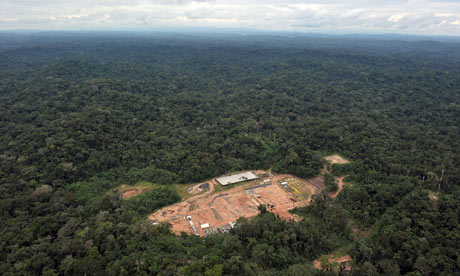
A new document reveals Pluspetrol interests in the gas reserves of Manú National Park in the Peruvian Amazon. Unesco considers the  park's biodiversity to exceed that of any other place on Earth. The national park is also home to Indigenous peoples with no regular contact with outsiders. The document is entitled “Research Plan for Geological Exploration and Surface Geochemistry in the Manú National Park and its Buffer Zone” and was produced by the consultancy Quartz Services on request by Pluspetrol. 

The document acknowledges that Peruvian law prohibits extractive operations in national parks. However, the document suggests that Quartz could “contribute not only to the continuation of activities in Lot 88 (a gas concession already existent), but also to the development of the Manú National Park protected area.”

Read more about the document in The Guardian here. 
Read More
Posted in Extractive Industries, FPIC, Latin America, Manu National Park, Peru | No comments

Wednesday, 30 January 2013

Landmark Ruling Against Indigenous Title in Guyana

Posted on 22:54 by Unknown
Via www.forestpeoples.org
The High Court of Guyana has controversially ruled in support of a mining concession on titled Indigenous lands, setting a dangerous precedent for the already marginalised Indigenous communities of Guyana. The case was brought by residents of Isseneru village who received title over the land in 2007 in terms of the Amerindian Act of 2006. The court held that as the mining permits were received before the Act came into operation they were not bound by its provisions. 

In a press statement, the Isseneru Village Council stated that they are “deeply disappointed and worried with this ruling and what it means to our village and to Amerindian communities in general. On the ground it has serious environmental and social impacts for us. The miners have, for example, brought with them problems related to drugs and prostitution. At the higher level, we feel that when the High Court tells us that we have no rights to decide and control what takes place on our land, then the land is not ours.…Just Friday, when inquiring at the office of the GGMC [Guyana Geology and Mines Commission], we learnt that our whole land is covered with mining concessions. Yet, the government has not informed us about this.” 

Find out more through the Forest Peoples’ Programme press statement in English here and in Spanish here. The Isseneru Village Council press statement can be accessed here. 
Read More
Posted in Community Land Rights, Extractive Industries, Guyana, Indigenous Peoples Rights, Land Tenure Security, Land Title, Latin America, Mining | No comments

Monday, 21 January 2013

Paudibhuyan Community Meeting on Extractives - Odisha

Posted on 23:51 by Unknown
In a meeting of the Paudibhuyan Community held in Kuanar Village, Keonjhar District, Odisha, India on 11 January 2012, community members raised serious concerns about mining and its impact on the environment and Indigenous communities in neighbouring areas. The government has begun to allot land in the area for prospecting and participants especially expressed concern that the sacred Khandadhar Mountain would be threatened. A company has begun erecting pillars in the area without any community consultation and without sharing information on the potential impact of mining on the local environment, community livelihoods and culture. Keonjhar Integrated Rural Development and Training Institute (KIRDTI), a local NGO, and Sankar Pani of Natural Justice participated in the meeting and suggested steps for how the community can utilise various legal instruments to protect community resources, including: 
  • Determining which companies have been allotted permits and clearances for mining in the region; 
  • Seeking the declaration of Khandadhar Mountain as a Heritage Site under the Biodiversity Act; 
  • Seeking the declaration of the region as Eco-Sensitive Area under the Environment Protection Act; 
  • Pursuing the recognition of community rights and habitat rights for the community as Indigenous Communities under the Forest Rights Act.
Read More
Posted in Asia, Extractive Industries, FPIC, India, Odisha | No comments

Tuesday, 8 January 2013

Paudibhuyan Community of Odisha to Draft BCP

Posted on 05:27 by Unknown
The traditional leaders of the Paudibhuyan community of the Khandadhar region of Sundergarh District in Odisha gathered on 24 December 2012 to prepare a strategy to protect their territory and culture. The meeting was facilitated by Jivan Vikas, a local NGO, and Sankar Pani of Natural Justice. Paudibhuyan is one of the thirteen Primarily Vulnerable Tribal Groups of Odisha, and its population is sharply declining due to various reasons. The community is concentrated in small pockets in the Sundergarh, Keounjhar, Deogaarh and Dhenkanal Districts. At the meeting, the elders of the community shared their rich cultural heritage and traditional knowledge which they have fostered for generations and encouraged their successors to preserve and protect their traditional knowledge. They also raised concerns about various threats to common resources, especially emphasising the impact of mining on local bodies of water. 

The community leaders resolved to draft a biocultural community protocol to record their traditional rights and resources. They demanded recognition of their habitat rights and community rights under Forest Rights Act. They recalled their traditional herbal medicines and recited their traditional folk songs and emphasised the need to preserve them for future generations.
Read More
Posted in biocultural community protocols, Community Protocols, Extractive Industries, Forest Rights Act, India, Odisha | No comments

Monday, 10 December 2012

First UN Forum on Business and Human Rights

Posted on 00:55 by Unknown
The first United Nations Forum on Business and Human Rights took place in Geneva from 3-5 December 2012, hosting around one thousand participants from around the world to discuss how governments and businesses are addressing the impacts of business activities on human rights. The Forum was prepared under the guidance of the Working Group on Human Rights and Transnational Corporations and Other Business Enterprises and was mandated to discuss trends and challenges in the implementation of the Guiding Principles on Business and Human Rights, and to promote dialogue and cooperation between actors, including identification of good practices. The Chairperson for the first Forum was Professor John Ruggie, former Special Representative of the Secretary-General for Business and Human Rights. 

The programme included break out sessions under the banner of “Taking Stock – 1 1/2 years after the endorsement of the Guiding Principles”, reviewing experiences under each of the three Guiding Principles’ pillars. The second day was spent considering the challenges in the implementation of the state duty to protect and business responsibility to respect human rights, as well as the role of civil society and the UN system, and the challenges for business affecting Indigenous peoples and ways forward. Side events were held from 3 December and included “Challenges and Opportunities for the Extractives Industry in integrating human rights into operations”, “The role of the legal profession in promoting implementation of the Guiding Principles”, “Indigenous Peoples and Extractive Industries” and “Impact and remedy of mining on Latin American Indigenous Women”. 

The Forum was attended by participants from 85 countries, including state delegations, business enterprises such as the mining, oil and energy industries and international financial institutions, as well as civil society organisations. A full list of participants can be found here. The full programme for the Forum can be found here. For more information, please see the Forum on Business and Human Rights website here. Natural Justice's recent submission to the Working Group on Human Rights and Transnational Corporations and Other Business Enterprises can be found here. 
Read More
Posted in Business, Extractive Industries, Human Rights, UN, Working Group on HR and TNCs | No comments

Tuesday, 25 September 2012

Rio Tinto Mine's Net Biodiversity Impact Measured

Posted on 12:29 by Unknown
A fascinating partnership between the International Union for Conservation of Nature (IUCN), the world’s largest environmental organisation, and Rio Tinto, one of the world’s largest mining groups, has produced its first report on the net impact on biodiversity of a Rio Tinto ilmenite mine in southeastern Madagascar. The report is a product of IUCN’s effort to track Rio Tinto’s progress to meeting its commitment to a Net Positive Impact (NPI) on biodiversity, an initiative launched at the 2004 IUCN World Conservation Congress. 

The study seeks to measure Rio Tinto’s ilmenite mine as a pilot to test the tools designed to achieve and quantify NPI on biodiversity. Rio Tinto is using four different conservation actions to minimise the impact on biodiversity; avoidance, minimisation, rehabilitation and restoration, and biodiversity offsets. In the present analysis, biodiversity losses and gains were measured and forecast for the period 2004–2065 (i.e. from the date of the NPI commitment to the anticipated date of mine closure) in order to determine whether the mitigation activities are sufficient to achieve NPI by closure. The overall analysis shows that the mine “could be on track to achieve a Net Positive Impact on biodiversity by the date of closure of the mine” subject to key reservations. 

The full report can be downloaded here. Find more recent IUCN publications on marine protected areas management, ecological restoration for protected areas, conserving dryland biodiversity and other subjects here.
Read More
Posted in Africa, Biodiversity Conservation, Extractive Industries, Madagascar | No comments

Friday, 7 September 2012

Anaya Report to UN Human Rights Council

Posted on 01:35 by Unknown
From the Special Rapporteur's
Youtube channel
The United Nation’s Special Rapporteur on the Rights of Indigenous Peoples, James Anaya, submitted a report to the UN Human Rights Council on July 7th, 2012. The report summarises the activities of the Special Rapporteur over the past year, including his examination of the thematic issue of violence against Indigenous women, and reports on his continuing study of issues related to extractive industries operating on or near Indigenous territories. 

From the summary, “The Special Rapporteur addresses some issues that have arisen during his consultations over the past year with indigenous peoples, business enterprises, States and non-governmental organizations. In particular, he notes that a focus on the rights implicated in the context of a specific extractive or development project is an indispensable starting point for discussions involving extractive industries operating in or near indigenous lands. In this connection, consultation and free, prior and informed consent standards are best conceptualized as safeguards against measures that may affect indigenous peoples’ rights. The Special Rapporteur also suggests that the “protect, respect and remedy” framework, which is incorporated into the Guiding Principles on Business and Human Rights, should apply to advance the specific rights of indigenous peoples in the same way as it applies to advance human rights more generally.”

Find the full report here. Learn more about the work of the Special Rapporteur on the Rights of Indigenous Peoples here. Follow the Special Rapporteur on Twitter at @unsr_jamesanaya and find his videos on Youtube here. 
Read More
Posted in Extractive Industries, Indigenous Peoples Rights, Special Rapporteur | No comments

Friday, 31 August 2012

Yanomami Community Members Killed in Clash with Miners

Posted on 03:13 by Unknown

While details are still emerging, it appears that as many as 80 Yanomami community members in the Amazon in Venezuela have been massacred by illegal gold miners. According to a submission to prosecutors this week in Puerto Ayacucho, the massacre occurred in early July. The national prosecutor’s office has appointed two officials to lead investigations, and the Venezuelan military has conducted interviews with witnesses. 

Survival International's Director, Stephen Corry, demanded that Amazonian governments "stop the rampant illegal mining, logging and settlement in indigenous territories." 

Read more from the New York Times here and from the BBC here.
Read More
Posted in Amazon, Extractive Industries, Latin America, Venezuela | No comments

Tuesday, 28 August 2012

Environmental Law Association Conference in Cape Town

Posted on 02:00 by Unknown
Photo via www.elasa.co.za
On 25 August 2012, Laureen Manuel of Natural Justice attended the Environmental Law Association’s annual conference, which focused on the legal challenges facing South Africans in a changing world and country in the context of sustainable development. The conference was attended by environmental lawyers, specialist academics and authors, and government and NGO representatives. 

The conference included five sessions with topics including the 2012 United Nations Conference on Sustainable Development (Rio+20), water and waste law and management, biodiversity conservation, community involvement and energy efficiency, as well as the implications of the South African Maccsand court case which held that mining companies must not only seek permission from the Department of Mineral Resources but also from local authorities if the land is not zoned for mining. The final session included presentations on the challenges and possible solutions relating to planning and environmental law with a specific focus on land use and requisite multiple authorisations.
Read More
Posted in Africa, Biodiversity, Extractive Industries, Our Work, South Africa | No comments

Friday, 27 July 2012

New film: "Palawan: Our struggle for nature and culture"

Posted on 20:18 by Unknown

Ancestral Land/Domain Watch (ALDAW), a local network of indigenous people struggling for the protection of their ancestral lands against large-scale corporations in the Philippines, has produced a short film entitled "Palawan: Our struggle for nature and culture". The synopsis is as follows:

The struggle to save Palawan (known as the Philippines’ Last Frontier) is not only about saving trees and rare species. It is also about nourishing the Filipino cultural heritage, so powerfully represented by those indigenous communities that - after escaping Spanish and American colonization and while resisting the new ‘mining imperialism’ now - continue to represent the 'living roots' from which all Filipinos originate. According to the filmmakers, environmental plundering by mining companies is not only a crime against nature but it is also a crime against culture, a sort of genocide that annihilates the most profound roots of the Filipino's history and ultimately plunders the cultural heritage of the whole nation. In this film, Kawali, the mythical ancestor depicted by Batak narrators, emphasises humility and trust towards the supernatural beings in charge of animals and plants. On the contrary, the attitude of Kawali’s brother-in-law comes to represent the epitome of inappropriate behaviour, such as the lack of respect towards the mystical keepers of animals and here, specifically, towards the “father of bees”, a relationship that contemporary Batak continues to restore though the lambay ceremony. The sudden switch between the narration of the Batak myth and the threats posed by mining companies serves to introduce the advocacy efforts of ALDAW.

ALDAW would like you to circulate these links amongst your friends and networks and kindly consider signing the following online petitions:
  • No to Mining in Palawan
  • Stop Mining Palawan Forest


Read More
Posted in Asia, Extractive Industries, Forest Peoples' Rights, FPIC | No comments
Older Posts Home
Subscribe to: Posts (Atom)

Popular Posts

  • Warsaw Climate Change Conference
    The 19th session of the Conference of the Parties to the United Nations Framework Convention on Climate Change takes place in Warsaw, Poland...
  • ICCA meeting for Southern and East Africa discusses ICCA examples from the region
    On 8 November Natural Justice and the ICCA Consortium co-convened a meeting near Cape Town, South Africa, on Indigenous Peoples and Local ...
  • New Research Questions Effectiveness of RSPO Standards
    "Members of the Roundtable on Sustainable Palm Oil ( RSPO ) are violating the rights of indigenous peoples and local communities in the...
  • Substantive and Procedural Injustices of the Nagoya Protocol
    A Joint Submission of the Grand Council of the Crees (Eeyou Istchee), endorsed by 73 organizations globally (and counting), comprehensively ...
  • Imbak Canyon Ethno-forestry
    Harry Jonas of Natural Justice presented on "ABS: From International Law to Local Realities" at a workshop hosted by Yayasan Sab...
  • United Nations Permanent Forum on Indigenous Issues Enters Second Week
    The twelfth session of the United Nations Permanent Forum on Indigenous Issues (UNPFII) is currently taking place at United Nations headqu...
  • Second edition of The Living Convention is now available in English and Spanish
    The Living Convention provides a range of the most important provisions relating to the linkages between Indigenous peoples and local commu...
  • International Workshop on ICCAs in Thika, Kenya
    On November 5th 2013, Maya Sikand from Natural Justice attended and presented at an International Workshop on ICCAs in Thika, Kenya. The wor...
  • Africa Regional Symposium for Community Land and Natural Resources Protection
    From 5-7 November, 30 pioneering community and civil society experts gathered in the !khwa ttu San community centre outside Cape Town, South...
  • South-South Exchange Mechanism
    On Thursday October 31st Maya Sikand of Natural Justice attended a meeting of the South-South Exchange Mechanism at the Global South-South ...

Categories

  • Aarhus Convention
  • ABS
  • ABS Capacity Development
  • ABS Capacity Development Initiative
  • ABS Focal Points
  • ABS Initiative
  • ABS Intiative
  • ABS Legislation
  • ABS Regulations
  • access and benefit sharing
  • Access to Justice
  • Accountability
  • ACHPR
  • Adaptation
  • Africa
  • African BCP
  • African Biodiversity Network
  • African Caucus
  • African Court on Human and People's Rights
  • African Group
  • African Union Commission
  • agricultural investments
  • Agriculture
  • Aichi Biodiversity Targets
  • AICHR
  • AIPP
  • ALDAW
  • ALF
  • Alien Tort Statute
  • Amazon
  • ARI-BCP
  • ARI-BCPs
  • Article 8j
  • Artisanal Fishing
  • ASEAN
  • Ashoka Fellowship
  • Asia
  • AU
  • Australia
  • BCP
  • BCP Initiative
  • BCP Toolkit
  • BCPs
  • BCRs
  • Benefit sharing
  • Berne Declaration
  • Bhutan
  • bio-cultural community protocols
  • biocultural community protocols
  • Biocultural Dialogues
  • Biocultural Diversity
  • Biocultural Rights
  • Biodiversity
  • Biodiversity Conservation
  • Biofuels
  • BIOPAMA
  • Biopiracy
  • bioprospecting
  • Biotrade
  • Borana
  • Borneo Conservancy Initiative
  • Borneo Eco Film Festival
  • Brazil
  • Bushbuckridge
  • Business
  • Business and Human Rights
  • Cambodia
  • CAO
  • Capacity Development
  • Carol Rose
  • CBD
  • CBD Alliance
  • CBNRM
  • CCPCJ
  • CEDAW
  • CFR
  • Childrens Rights
  • Chinese Ministry of Commerce
  • CIFOR
  • CIKOD
  • Climate change
  • Climate Change Adaptation
  • Commons
  • Communications
  • Community Empowerment
  • community film-making
  • community forest resources
  • Community Governance
  • Community Land Rights
  • Community Protocols
  • community resource rights
  • Community Rights
  • community-based conservation
  • conflict prevention
  • Conservation
  • Conservation Governanace
  • Consultation
  • Convention on Biological Diversity
  • Convention to Combat Desertification
  • COP 11
  • COP 18
  • COP11
  • corporate liability
  • Costa Rica
  • CSR
  • Customary Justice
  • Customary Sustainable Use
  • Design
  • Development
  • development aggression
  • Dialogue
  • Documentation
  • Doha
  • DRC
  • Dusun
  • E-Learning
  • ECCHR
  • ECO
  • Economic Growth
  • Ecosystem Services
  • Ecuador
  • Education
  • Employment
  • EMRIP
  • Endorois Case
  • Energy
  • ENVI
  • Environmental Impact Assessment
  • Environmental Law
  • environmental protection
  • ESPA
  • ETC COMPAS
  • EU
  • Eviction
  • Extractive Industries
  • FAO
  • Farmers' Rights
  • FCPF
  • Finance
  • Financial Sector
  • First Peoples
  • Food Security
  • Ford Foundation
  • Foreign Investment and Cooperation
  • Forest Carbon Partnership Facility
  • Forest Peoples' Rights
  • Forest Rights Act
  • Forestry Resources
  • Forests
  • Forever Sabah
  • FPIC
  • FPP
  • FRA
  • Fracking
  • Francais
  • Friedrich Ebert Stifung
  • Gaia Foundation
  • GCF
  • GDF
  • GEF
  • Gender
  • Genetic Resources
  • GEO
  • GESA
  • Ghana
  • Global Canopy Programme
  • Global Environmental Institute
  • Global Forest Coalition
  • GM
  • GNHRE
  • GPS
  • Green Economy
  • Grievance Mechanisms
  • Growing Forest Partnership Initiative
  • GTCR
  • Gujjar
  • Guyana
  • Harry Jonas
  • Heart of Borneo
  • Heinrich Boell
  • Heritage
  • Heritage Parks
  • Himachal Pradesh
  • Honduras
  • Hoodia
  • Human and Environmental Rights monitoring
  • Human Rights
  • Human Rights Council
  • Hutan
  • IACHR
  • IASS
  • ICCA Consortium
  • ICCAs
  • ICMM
  • ICNP
  • IDLO
  • IEN
  • IFC
  • IFIs
  • IIED
  • IIPFCC
  • IISD
  • ILCF
  • ILO
  • Independent Accountability Mechanisms
  • India
  • indigenous
  • indigenous and traditional knowledge
  • Indigenous Information Network
  • Indigenous Knowledge Systems
  • Indigenous Livestock Breeds
  • Indigenous Peoples
  • Indigenous Peoples Caucus
  • Indigenous Peoples Movement
  • Indigenous Peoples Rights
  • Indigenous Peoples' Rights
  • Indonesia
  • Infrastructure
  • Institute of Marine & Environmental Law
  • Intellectual Property
  • Inter-America
  • Intercontinental Cry
  • International
  • International Advocacy
  • International Council on Mining and Metals
  • International Journal of the Commons
  • International Land Coalition
  • IPACC
  • IPBES
  • IPR
  • IPRs
  • IUCN
  • IUCN WCC
  • IWGIA
  • James Anaya
  • JOAS
  • judgement
  • Just Conservation
  • Justice
  • Karoo
  • Katiba Institute
  • Kenya
  • Kenyan National Land Commission
  • Khoe
  • Khoikhoi
  • KhwaTtu
  • Kinabalu Park
  • KIRDTI
  • Kivulini Trust
  • Knowledge sharing
  • KRAPAVIS
  • Kukula
  • Kyoto Protocol
  • Lamu
  • Land Grabbing
  • Land investments
  • Land Matrix Project
  • Land Tenure Security
  • Land Title
  • LAPPSET
  • LAPSSET
  • Latin America
  • LEAP
  • LED
  • Legal Aid
  • Legal Empowerment
  • Legal ngo
  • Legal Research
  • Legal Review
  • Legal Submissions
  • Livelihoods
  • Livestock keepers
  • Livestock Keepers' Rights
  • Living Convention
  • Local Communities
  • Locally Controlled Forestry
  • low-cost solutions
  • LPP
  • LPPS
  • Madagascar
  • Major Infrastructure
  • Malaysia
  • Maldhari
  • Maliasili Initiatives
  • Manu National Park
  • manual
  • Maori
  • MAT
  • Mau Forest
  • Messaging
  • Mexico
  • Millennium Development Goals
  • Mining
  • Ministry of Environmental Protection
  • Minority Rights
  • Mitigation
  • Mokgola community
  • Mozambique
  • MSP
  • Multistakeholder Processes
  • Nagoya Protocol
  • Nahuru
  • Nama
  • Namati
  • Namibia
  • National Environmental Management
  • National Geographic
  • Natural Capital
  • natural resources
  • NBSAPs
  • New York
  • New Zealand
  • NKC
  • Norton Rose Fullbright
  • NRM
  • OAS
  • Ocean Grabbing
  • Oceania
  • Odisha
  • OECD
  • Ogiek Community
  • Online Eduction
  • Open Society Foundation in Southern Africa
  • OSISA
  • Ostrom
  • Our Work
  • Oxfam
  • Pacific Region
  • PACOS
  • Palawan
  • Palm Oil
  • Pan-African Workshop
  • Paraguay
  • Participatory Mapping
  • participatory video
  • Pastoralist
  • Pastoralist Rights
  • Peru
  • Philippines
  • Photography
  • phyto-trade
  • PIC
  • Platinum mining
  • pollinators
  • post-2015 agenda
  • Poverty
  • Programme of Work on Protected Areas
  • Protected Areas
  • Publications
  • PULP
  • Puppet theatre
  • Rachel Carson Center
  • Raika
  • Rainforest Foundation Norway
  • Ramsar
  • REDD
  • REDD+
  • Research
  • Resilience
  • resource curse
  • Resource Rights
  • Rio +20
  • ROAPE
  • Rooibos
  • RRI
  • RSPO
  • Sabah
  • Sacred Natural Sites
  • Sacred Sites
  • Safeguards
  • Samburu
  • San
  • Sariska Tiger Reserve
  • Save Lamu
  • Sawit Watch
  • SBI
  • SBSTA
  • SBSTTA
  • Scientific Consensus Statement
  • SEI
  • Self-determination
  • SGP
  • Small-Scale Fishing
  • SNS
  • Soil
  • SOMO
  • South Africa
  • South-South Exchange Mechanism
  • Southeast Asia
  • Southern Africa
  • spatial planning
  • Special Rapporteur
  • Srishti
  • State Department of Tribal Development & Forests
  • stewardship rights
  • Strategic Litigation
  • SUARA
  • SUHAKAM
  • Sustainability
  • Sustainable Agriculture
  • Sustainable Development
  • Sustainable Development Goals
  • SWOP
  • Tana River Delta
  • Tanchara
  • Tanzania
  • Target 11
  • TCEs
  • TCF
  • tenure
  • The Christensen Fund
  • The Commons
  • The Right to Responsibility
  • TK
  • TK Commons
  • Toolkit
  • Traditional Healers
  • Traditional Justice
  • Traditional Knowledge
  • Transnational litigation
  • Transparency
  • Treasure the Karoo Action Group
  • TRRs
  • UEBT
  • UN
  • UN Declaration on the Rights of Indigenous Peoples
  • UN Global Compact
  • UN Guiding Principles
  • UN Human Rights System
  • UN working group on Human rights
  • UN-REDD
  • UNDP
  • UNDRIP
  • UNEP
  • UNESCO Biosphere Reserve
  • UNFCCC
  • UNGA
  • UNHRS
  • United Nations Permanent Forum on Indigenous Issues
  • United States
  • UNPFII
  • UNU-IAS
  • US Secretary of the Treasury
  • Vanuatu
  • Venezuela
  • Vidarbha LIvelihood Forum
  • Vidarva
  • Video
  • Voluntary Principles
  • Volunteer
  • WCMC
  • Wetlands
  • Wild 10
  • wildlife protection amendment bill 2013
  • WIPO
  • women
  • Women's Rights
  • Working Group on HR and TNCs
  • World Bank
  • World Indigenous Network Conference
  • World Wilderness Congress
  • WWF
  • ZAMI
  • ZCC
  • ZELA

Blog Archive

  • ▼  2013 (198)
    • ▼  November (10)
      • Warsaw Climate Change Conference
      • Heart of Borneo and Forever Sabah
      • ICCA meeting for Southern and East Africa discusse...
      • New Research Questions Effectiveness of RSPO Stand...
      • Africa Regional Symposium for Community Land and N...
      • National Conference on Indigenous Peoples' Land Ri...
      • International Workshop on ICCAs in Thika, Kenya
      • First Peoples release Indigenous Rights Risk Report
      • South-South Exchange Mechanism
      • Natural Justice Attends Side Event During UN GA on...
    • ►  October (20)
    • ►  September (18)
    • ►  August (9)
    • ►  July (14)
    • ►  June (16)
    • ►  May (20)
    • ►  April (22)
    • ►  March (29)
    • ►  February (20)
    • ►  January (20)
  • ►  2012 (221)
    • ►  December (8)
    • ►  November (35)
    • ►  October (29)
    • ►  September (21)
    • ►  August (23)
    • ►  July (18)
    • ►  June (15)
    • ►  May (22)
    • ►  April (13)
    • ►  March (11)
    • ►  February (15)
    • ►  January (11)
  • ►  2011 (88)
    • ►  December (8)
    • ►  November (6)
    • ►  October (13)
    • ►  September (10)
    • ►  August (11)
    • ►  July (13)
    • ►  June (14)
    • ►  May (10)
    • ►  April (3)
Powered by Blogger.

About Me

Unknown
View my complete profile