Ict Support

  • Subscribe to our RSS feed.
  • Twitter
  • StumbleUpon
  • Reddit
  • Facebook
  • Digg
Showing posts with label Grievance Mechanisms. Show all posts

Tuesday, 29 October 2013

Mining, Oil and Gas at MindSpeak Business Club

Posted on 02:01 by Unknown
http://basetitanium.com/education-and-media/photo-library
On Saturday October 26th Maya Sikand from Natural Justice attended a public forum in Nairobi about the Voluntary Principles and the growing mining, oil and gas sectors in Kenya. The meeting was hosted by business analyst Aly-Khan Saatchu's monthly business club, Mindspeak. The panel featured Cliff Otega, a Kenyan mining analyst, His Excellency David Angell, Canadian High Commissioner to Kenya, Evelyn Samba, Deputy Secretary to the Kenya National Commission on Human Rights, and Simon Wall, Corporate Affairs Manager of Base Titanium. The meeting drew an audience of over 200 people.

The challenges for the new and growing mining sector in Kenya and the opportunities for guidelines such as the Voluntary Principles were discussed by each of the panelists. Cliff Otega pointed out to a room full of young people hoping to benefit from this new industry, that the extractives industry doesn't actually provide many employment opportunities as it is so capital and machinery intensive. Kenya should not look to this as the sector that will transform the economy for youth. However, all the panelists agreed that the multiplier effects, including infrastructure and services development will bring benefits to the region.
A focus for the meeting was on the Voluntary Principles on Security and Human Rights, a multi-stakeholder initiative involving governments, companies and NGOs, that was founded in 2000. It is the only set of principles specifically guiding the extractive industries in respecting human rights. Currently, several countries, including Canada, are participants, as well as a number of corporations and NGOs. High Commissioner Angell, Chair of the Voluntary Principles from 2011-12 spoke extremely positively of the Canadian government's and corporations' efforts to improve Corporate Social Responsibility programs in the extractives sector. Currently, Canadian extractive companies have over $10 billion invested in East Africa alone.

Many audience members as well as representatives from KNCHR raised questions about whether extractives-led development actually benefits local communities. There was also much discussion on redress mechanisms to actually hold international companies accountable to these lofty principles. The issues of benefit sharing, land acquisition and compensation were also raised as matters Kenyans need to be wary of as the extractives sector expands.

The major case for mining in Kenya discussed was Base Titanium Mineral Sands project in Kwale. This is Kenya's first large-scale, world-class mining investment. Simon Wall from Base Titanium spoke about the company's environmental and social performance that adheres to the highest global standards, particularly as signatories to the Extractive Industries Transparency Initiative. In the 13 year lifespan of the project Base Titanium will put over $1.1 billion into the Kenyan economy, $220 million in direct royalties to the government and the rest as operational costs including food, salaries and services.


Read More
Posted in Extractive Industries, Grievance Mechanisms, Mining, Voluntary Principles | No comments

Sunday, 6 October 2013

Save Lamu Forum on Human and Environmental Rights Monitoring

Posted on 04:06 by Unknown
On Saturday October 5th Steph Booker and Maya Sikand from Natural Justice presented at a Forum hosted by Save Lamu on Human and Environmental Rights Monitoring in Lamu Town. Participants of the meeting included members of the Lamu community from the Islands and Mainland as well as representatives from communities along the LAPSSET corridor. 

Natural Justice gave a presentation on 'What is Human and Environmental Rights Monitoring?'. Participants then separated into groups according to region, and began documenting changes they have witnessed in their areas. This was an important first step in collecting information, and understanding what sort of questions are asked during human rights monitoring. It is hoped that this forum is the beginning of a wider effort at human rights monitoring training for community organisations along the LAPSSET corridor. Such documentation is an important tool when making a case about human or environmental rights abuses against companies or the government.

Presentations were also made by Sarah Singh from Accountability Counsel and Mohammed Ramadhan from the Kenyan National Commission on Human Rights on national and international grievance mechanisms. Save Lamu have initiated creative ways to bring all the information about changes in the communities to one central place, for example through text messages.
Read More
Posted in Grievance Mechanisms, Human and Environmental Rights monitoring, LAPSSET, Save Lamu | No comments

Saturday, 28 September 2013

Natural Justice Attends Events at World Bank Headquarters Addressing Independent Accountability Mechanisms of International Financial Institutions

Posted on 02:25 by Unknown
On 27 September 2013, the World Bank hosted the Tenth Annual Meeting of Independent Accountability Mechanisms (IAMs) at its headquarters in Washington, DC. The World Bank created the first IAM twenty years ago when it established the World Bank Inspection Panel to handle the grievances of people affected by its projects. Today, nearly every international financial institution (IFI) has an IAM to provide: 1) a forum for dispute resolution between project-affected people and those implementing the project; and/or 2) a mechanism to ensure that the IFI is complying with its own policies and procedures in regard to specific projects. 

At the meeting, Eimi Watanabe, the Chairperson of the Inspection Panel, made introductory remarks and introduced former Congressman Barney Frank, who worked to create the Inspection Panel, and Jim Yong Kim, President of the World Bank Group. In his remarks, Mr. Kim noted that the World Bank needed to work to put people first in financing projects around the world. Afterward, a panel made up of World Bank management, top IAM staff, NGO staff, and two community members who had filed complaints with the Inspection Panel addressed issues 

That afternoon, Accountability Counsel, along with several other NGOs, held an event at World Bank headquarters entitled "A Conversation With IAMs About the Promise of Remedy and Accountability". The event brought together many top staff of IAMs from a number of IFIs, including the Principal of the European Investment Bank Complaints Mechanism, the Vice President of the Compliance Advisor/Ombudman the Chair of the African Development Bank Independent Review Mechanism, other IAM staff, and several NGOs who work on IAM issues. One theme running throughout the meeting was an acknowledgment that IFIs are going through a period of transition, as institutions such as the World Bank see their roles reduced in proportion to an increasing amount of investment lending being handled by private banks. An additional change is the nature of IFI lending itself, as an increasing amount is directed toward non-project lending. For example, it was noted that half of World Bank lending, and two thirds of IFC lending go toward non-project investments, to which safeguard policies do not apply. 

The IAM meetings are especially important in light of the current update to the World Bank's environmental and social safeguard policies. One of the Inspection Panel's roles is to evaluate whether the World Bank is adhering to its policies, and although these policies may be applied in fewer instances due to increased non-project lending, they still set the standard for other IFIs worldwide. Natural Justice has submitted comments on these policies, and it is projected that the World Bank will release a draft for comment early in 2014. 
Read More
Posted in Accountability, Grievance Mechanisms, IFIs, Independent Accountability Mechanisms, Safeguards | No comments

Tuesday, 15 January 2013

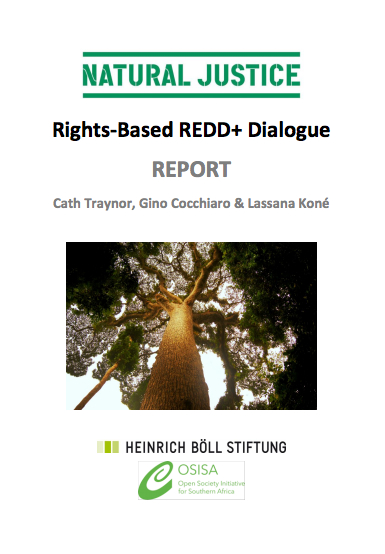
Report on CT REDD+ Dialogue

Posted on 13:04 by Unknown
The outcomes of the Rights-based REDD+ dialogue held in Cape Town in November 2012 have been released in a new report. The dialogue was hosted by Natural Justice with the support of the Heinrich Boell Foundation for Southern Africa and the Open Society Iniative for Southern Africa. Issues of concern regarding Reducing Emissions from Deforestation and Forest Degradation (REDD+) activities on the African continent included the limited participation of forest-dependent communities, lack of appropriate REDD+ information, the diversity and complexity of safeguard standards which could increase communities reliance upon outsiders and experts, insufficient or lacking grievance and compliance mechanisms, limited gender awareness, that communities may not be aware of their rights, and that existing rights may not be enforced. 

Participants felt that REDD+ could offer opportunities to Indigenous peoples and local communities including enhanced participation and representation, the chance to call for greater rights especially regarding land tenure, and to seek independent monitoring of REDD+. A post-dialogue analysis of the potential of biocultural community protocols (BCPs) to address rights-based concerns within REDD+ raised during the dialogue suggests that BCPs may have the potential to address some of the key REDD+ challenges faced by forest-dependent communities. While BCPs are no panacea, they could enhance the capacity of communities to articulate their values, customs, and rights if they decide to engage with the REDD+ mechanism. 

The report can be downloaded here.
Read More
Posted in Africa, Gender, Grievance Mechanisms, Heinrich Boell, OSISA, REDD+, Safeguards, South Africa | No comments
Older Posts Home
Subscribe to: Posts (Atom)

Popular Posts

  • Warsaw Climate Change Conference
    The 19th session of the Conference of the Parties to the United Nations Framework Convention on Climate Change takes place in Warsaw, Poland...
  • Exploring Native Land Rights in Sabah
    Harry Jonas and Holly Shrumm (Natural Justice) attended a symposium entitled "Sabah Native Land Rights: Issues, Challenges and the Way ...
  • ICCA Consortium and Natural Justice at WILD 10
    From the 8th to the 10th of October the ICCA Consortium representatives and Natural Justice attended the 10th World Wilderness Congress, Wi...
  • Second edition of The Living Convention is now available in English and Spanish
    The Living Convention provides a range of the most important provisions relating to the linkages between Indigenous peoples and local commu...
  • South-South Exchange Mechanism
    On Thursday October 31st Maya Sikand of Natural Justice attended a meeting of the South-South Exchange Mechanism at the Global South-South ...
  • E-Module on TK and Sustainable Use of Biodiversity
    Natural Justice has developed a number of draft e-learning modules to support communities developing biocultural community protocols ( BCP...
  • ICCA meeting for Southern and East Africa discusses ICCA examples from the region
    On 8 November Natural Justice and the ICCA Consortium co-convened a meeting near Cape Town, South Africa, on Indigenous Peoples and Local ...
  • New Research Questions Effectiveness of RSPO Standards
    "Members of the Roundtable on Sustainable Palm Oil ( RSPO ) are violating the rights of indigenous peoples and local communities in the...
  • Article on Unique Rights of Indigenous Peoples - Think Africa Press
    Via  thinkafricapress.com The body of law and policy around the rights of Indigenous peoples and local communities is changing and expanding...
  • Natural Justice and the Berne Declaration Submit New Letter to EU MEPs Regarding the Implementation of the Nagoya Protocol as the European Parliament considers its Implementation within the Union
    On 6 September 13, Natural Justice and the Berne Declaration sent an letter to the Members of the European Parliament regarding the implem...

Categories

  • Aarhus Convention
  • ABS
  • ABS Capacity Development
  • ABS Capacity Development Initiative
  • ABS Focal Points
  • ABS Initiative
  • ABS Intiative
  • ABS Legislation
  • ABS Regulations
  • access and benefit sharing
  • Access to Justice
  • Accountability
  • ACHPR
  • Adaptation
  • Africa
  • African BCP
  • African Biodiversity Network
  • African Caucus
  • African Court on Human and People's Rights
  • African Group
  • African Union Commission
  • agricultural investments
  • Agriculture
  • Aichi Biodiversity Targets
  • AICHR
  • AIPP
  • ALDAW
  • ALF
  • Alien Tort Statute
  • Amazon
  • ARI-BCP
  • ARI-BCPs
  • Article 8j
  • Artisanal Fishing
  • ASEAN
  • Ashoka Fellowship
  • Asia
  • AU
  • Australia
  • BCP
  • BCP Initiative
  • BCP Toolkit
  • BCPs
  • BCRs
  • Benefit sharing
  • Berne Declaration
  • Bhutan
  • bio-cultural community protocols
  • biocultural community protocols
  • Biocultural Dialogues
  • Biocultural Diversity
  • Biocultural Rights
  • Biodiversity
  • Biodiversity Conservation
  • Biofuels
  • BIOPAMA
  • Biopiracy
  • bioprospecting
  • Biotrade
  • Borana
  • Borneo Conservancy Initiative
  • Borneo Eco Film Festival
  • Brazil
  • Bushbuckridge
  • Business
  • Business and Human Rights
  • Cambodia
  • CAO
  • Capacity Development
  • Carol Rose
  • CBD
  • CBD Alliance
  • CBNRM
  • CCPCJ
  • CEDAW
  • CFR
  • Childrens Rights
  • Chinese Ministry of Commerce
  • CIFOR
  • CIKOD
  • Climate change
  • Climate Change Adaptation
  • Commons
  • Communications
  • Community Empowerment
  • community film-making
  • community forest resources
  • Community Governance
  • Community Land Rights
  • Community Protocols
  • community resource rights
  • Community Rights
  • community-based conservation
  • conflict prevention
  • Conservation
  • Conservation Governanace
  • Consultation
  • Convention on Biological Diversity
  • Convention to Combat Desertification
  • COP 11
  • COP 18
  • COP11
  • corporate liability
  • Costa Rica
  • CSR
  • Customary Justice
  • Customary Sustainable Use
  • Design
  • Development
  • development aggression
  • Dialogue
  • Documentation
  • Doha
  • DRC
  • Dusun
  • E-Learning
  • ECCHR
  • ECO
  • Economic Growth
  • Ecosystem Services
  • Ecuador
  • Education
  • Employment
  • EMRIP
  • Endorois Case
  • Energy
  • ENVI
  • Environmental Impact Assessment
  • Environmental Law
  • environmental protection
  • ESPA
  • ETC COMPAS
  • EU
  • Eviction
  • Extractive Industries
  • FAO
  • Farmers' Rights
  • FCPF
  • Finance
  • Financial Sector
  • First Peoples
  • Food Security
  • Ford Foundation
  • Foreign Investment and Cooperation
  • Forest Carbon Partnership Facility
  • Forest Peoples' Rights
  • Forest Rights Act
  • Forestry Resources
  • Forests
  • Forever Sabah
  • FPIC
  • FPP
  • FRA
  • Fracking
  • Francais
  • Friedrich Ebert Stifung
  • Gaia Foundation
  • GCF
  • GDF
  • GEF
  • Gender
  • Genetic Resources
  • GEO
  • GESA
  • Ghana
  • Global Canopy Programme
  • Global Environmental Institute
  • Global Forest Coalition
  • GM
  • GNHRE
  • GPS
  • Green Economy
  • Grievance Mechanisms
  • Growing Forest Partnership Initiative
  • GTCR
  • Gujjar
  • Guyana
  • Harry Jonas
  • Heart of Borneo
  • Heinrich Boell
  • Heritage
  • Heritage Parks
  • Himachal Pradesh
  • Honduras
  • Hoodia
  • Human and Environmental Rights monitoring
  • Human Rights
  • Human Rights Council
  • Hutan
  • IACHR
  • IASS
  • ICCA Consortium
  • ICCAs
  • ICMM
  • ICNP
  • IDLO
  • IEN
  • IFC
  • IFIs
  • IIED
  • IIPFCC
  • IISD
  • ILCF
  • ILO
  • Independent Accountability Mechanisms
  • India
  • indigenous
  • indigenous and traditional knowledge
  • Indigenous Information Network
  • Indigenous Knowledge Systems
  • Indigenous Livestock Breeds
  • Indigenous Peoples
  • Indigenous Peoples Caucus
  • Indigenous Peoples Movement
  • Indigenous Peoples Rights
  • Indigenous Peoples' Rights
  • Indonesia
  • Infrastructure
  • Institute of Marine & Environmental Law
  • Intellectual Property
  • Inter-America
  • Intercontinental Cry
  • International
  • International Advocacy
  • International Council on Mining and Metals
  • International Journal of the Commons
  • International Land Coalition
  • IPACC
  • IPBES
  • IPR
  • IPRs
  • IUCN
  • IUCN WCC
  • IWGIA
  • James Anaya
  • JOAS
  • judgement
  • Just Conservation
  • Justice
  • Karoo
  • Katiba Institute
  • Kenya
  • Kenyan National Land Commission
  • Khoe
  • Khoikhoi
  • KhwaTtu
  • Kinabalu Park
  • KIRDTI
  • Kivulini Trust
  • Knowledge sharing
  • KRAPAVIS
  • Kukula
  • Kyoto Protocol
  • Lamu
  • Land Grabbing
  • Land investments
  • Land Matrix Project
  • Land Tenure Security
  • Land Title
  • LAPPSET
  • LAPSSET
  • Latin America
  • LEAP
  • LED
  • Legal Aid
  • Legal Empowerment
  • Legal ngo
  • Legal Research
  • Legal Review
  • Legal Submissions
  • Livelihoods
  • Livestock keepers
  • Livestock Keepers' Rights
  • Living Convention
  • Local Communities
  • Locally Controlled Forestry
  • low-cost solutions
  • LPP
  • LPPS
  • Madagascar
  • Major Infrastructure
  • Malaysia
  • Maldhari
  • Maliasili Initiatives
  • Manu National Park
  • manual
  • Maori
  • MAT
  • Mau Forest
  • Messaging
  • Mexico
  • Millennium Development Goals
  • Mining
  • Ministry of Environmental Protection
  • Minority Rights
  • Mitigation
  • Mokgola community
  • Mozambique
  • MSP
  • Multistakeholder Processes
  • Nagoya Protocol
  • Nahuru
  • Nama
  • Namati
  • Namibia
  • National Environmental Management
  • National Geographic
  • Natural Capital
  • natural resources
  • NBSAPs
  • New York
  • New Zealand
  • NKC
  • Norton Rose Fullbright
  • NRM
  • OAS
  • Ocean Grabbing
  • Oceania
  • Odisha
  • OECD
  • Ogiek Community
  • Online Eduction
  • Open Society Foundation in Southern Africa
  • OSISA
  • Ostrom
  • Our Work
  • Oxfam
  • Pacific Region
  • PACOS
  • Palawan
  • Palm Oil
  • Pan-African Workshop
  • Paraguay
  • Participatory Mapping
  • participatory video
  • Pastoralist
  • Pastoralist Rights
  • Peru
  • Philippines
  • Photography
  • phyto-trade
  • PIC
  • Platinum mining
  • pollinators
  • post-2015 agenda
  • Poverty
  • Programme of Work on Protected Areas
  • Protected Areas
  • Publications
  • PULP
  • Puppet theatre
  • Rachel Carson Center
  • Raika
  • Rainforest Foundation Norway
  • Ramsar
  • REDD
  • REDD+
  • Research
  • Resilience
  • resource curse
  • Resource Rights
  • Rio +20
  • ROAPE
  • Rooibos
  • RRI
  • RSPO
  • Sabah
  • Sacred Natural Sites
  • Sacred Sites
  • Safeguards
  • Samburu
  • San
  • Sariska Tiger Reserve
  • Save Lamu
  • Sawit Watch
  • SBI
  • SBSTA
  • SBSTTA
  • Scientific Consensus Statement
  • SEI
  • Self-determination
  • SGP
  • Small-Scale Fishing
  • SNS
  • Soil
  • SOMO
  • South Africa
  • South-South Exchange Mechanism
  • Southeast Asia
  • Southern Africa
  • spatial planning
  • Special Rapporteur
  • Srishti
  • State Department of Tribal Development & Forests
  • stewardship rights
  • Strategic Litigation
  • SUARA
  • SUHAKAM
  • Sustainability
  • Sustainable Agriculture
  • Sustainable Development
  • Sustainable Development Goals
  • SWOP
  • Tana River Delta
  • Tanchara
  • Tanzania
  • Target 11
  • TCEs
  • TCF
  • tenure
  • The Christensen Fund
  • The Commons
  • The Right to Responsibility
  • TK
  • TK Commons
  • Toolkit
  • Traditional Healers
  • Traditional Justice
  • Traditional Knowledge
  • Transnational litigation
  • Transparency
  • Treasure the Karoo Action Group
  • TRRs
  • UEBT
  • UN
  • UN Declaration on the Rights of Indigenous Peoples
  • UN Global Compact
  • UN Guiding Principles
  • UN Human Rights System
  • UN working group on Human rights
  • UN-REDD
  • UNDP
  • UNDRIP
  • UNEP
  • UNESCO Biosphere Reserve
  • UNFCCC
  • UNGA
  • UNHRS
  • United Nations Permanent Forum on Indigenous Issues
  • United States
  • UNPFII
  • UNU-IAS
  • US Secretary of the Treasury
  • Vanuatu
  • Venezuela
  • Vidarbha LIvelihood Forum
  • Vidarva
  • Video
  • Voluntary Principles
  • Volunteer
  • WCMC
  • Wetlands
  • Wild 10
  • wildlife protection amendment bill 2013
  • WIPO
  • women
  • Women's Rights
  • Working Group on HR and TNCs
  • World Bank
  • World Indigenous Network Conference
  • World Wilderness Congress
  • WWF
  • ZAMI
  • ZCC
  • ZELA

Blog Archive

  • ▼  2013 (198)
    • ▼  November (10)
      • Warsaw Climate Change Conference
      • Heart of Borneo and Forever Sabah
      • ICCA meeting for Southern and East Africa discusse...
      • New Research Questions Effectiveness of RSPO Stand...
      • Africa Regional Symposium for Community Land and N...
      • National Conference on Indigenous Peoples' Land Ri...
      • International Workshop on ICCAs in Thika, Kenya
      • First Peoples release Indigenous Rights Risk Report
      • South-South Exchange Mechanism
      • Natural Justice Attends Side Event During UN GA on...
    • ►  October (20)
    • ►  September (18)
    • ►  August (9)
    • ►  July (14)
    • ►  June (16)
    • ►  May (20)
    • ►  April (22)
    • ►  March (29)
    • ►  February (20)
    • ►  January (20)
  • ►  2012 (221)
    • ►  December (8)
    • ►  November (35)
    • ►  October (29)
    • ►  September (21)
    • ►  August (23)
    • ►  July (18)
    • ►  June (15)
    • ►  May (22)
    • ►  April (13)
    • ►  March (11)
    • ►  February (15)
    • ►  January (11)
  • ►  2011 (88)
    • ►  December (8)
    • ►  November (6)
    • ►  October (13)
    • ►  September (10)
    • ►  August (11)
    • ►  July (13)
    • ►  June (14)
    • ►  May (10)
    • ►  April (3)
Powered by Blogger.

About Me

Unknown
View my complete profile