Ict Support

  • Subscribe to our RSS feed.
  • Twitter
  • StumbleUpon
  • Reddit
  • Facebook
  • Digg

Monday, 11 June 2012

Borana BCP Training

Posted on 06:39 by Unknown
From 5-7 July, Natural Justice and Kivulini Trust facilitated a biocultural community protocol (BCP) training workshop for the Borana pastoralist community of the Waso Rangelands, Kenya. The increase in development projects, wildlife conservation areas and influx of other groups in Waso has contributed to the loss of the Borana’s traditional lands and diminished grazing areas for their livestock. This continued loss has led to a slow decline in their traditional institutions, customs and norms as members of the community are forced to choose other livelihood options. This change has also negatively impacted the biodiversity in the area, which was conserved and sustainably used by the communities through their traditional pastoralist practices. 

The BCP training in Waso was attended by a number of the community members, including elders, women, youth and NGOs supporting the community. The BCP process, or Fin Jiru Gumi Waso (Wellbeing of the Waso Community in KiBorana), will combine with a number of ongoing projects in the region which seek to protect the community’s resources and culture. The process will highlight the community’s customary laws and norms around biodiversity conservation, inform the community of their relevant international and national biocultural rights, establish representative bodies to dialogue with government or private enterprises interested in utilizing the resources and/or traditional knowledge on their traditional lands, and create a platform for discussion with neighbouring communities in the interest of peacebuilding. This initiative is supported by the Christensen Fund.
Read More
Posted in Africa, Community Protocols, Land Tenure Security, Livestock Keepers' Rights, Our Work | No comments

Final FAO Voluntary Guidelines on Tenure

Posted on 02:45 by Unknown
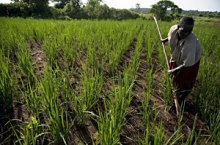
Farmer in Uganda. Photo via fao.org
The Committee on World Food Security (CFS) endorsed the ‘Voluntary Guidelines on the Responsible Governance of Tenure of Land, Fisheries and Forests in the Context of National Food Security’ on 11 May.  The process of developing the guidelines was initiated by the Food and Agriculture Organisation (FAO) of the United Nations in 2009 and was finalised by CFS lead negotiations involving governments, civil society, the private sector, international organisations and academia. CFS chairperson Yaya Olaniran described the guidelines as "the product of a three year, inclusive process of consultations and negotiations that brought together many stakeholders and ensured that a wide range of voices were heard…The result is that we have a meaningful series of principles and practices that everybody — countries, the private sector, farmers, civil society — can stand behind and support, and that will work out in the real world." 

The guidelines encourage increased recognition of informal tenure systems, ensuring tenure administrative systems are affordable and accessible, managing restitution for those illegally evicted from their lands in the past, ensuring the rights of indigenous communities, increasing transparency in agricultural investments, supporting effective and equitable dispute resolution around land tenure, and addressing increased urbanisation. Looking forward, implementation will depend upon governments which participated in the negotiations. 

The guidelines can be downloaded here and an informal aid for reading the guidelines can be found here. FAO’s press statement upon the adoption of the guidelines is here. 
Read More
Posted in Farmers' Rights, Land Tenure Security | No comments

Friday, 8 June 2012

New RRI Report on Forest Tenure Rights

Posted on 10:14 by Unknown
With over 50 new laws passed to protect forest tenure rights and an increase from 10-15% to 21-31% of forest owned or controlled by Indigenous Peoples and forest communities from 1992 to today, there has been significant progress. This is not only a significant advance for communities, it also strengthens conservation as community managed forests outperformed public protected areas in preventing deforestation. Unfortunately, much of this progress has come in a few countries, most of them in Latin America. Most countries lack effective protections for the tenure rights of communities. While there is increased recognition of traditional land tenure rights, much of this recognition has had limited impact. Increased large-scale land acquisitions threaten to further undermine tenure security. 

In this context, the Rights and Resources Initiative has prepared a new report to take stock of the progress made since the 1992 Earth Summit in Rio de Janeiro’s commitment to sustainable development. The report includes specific examples from China, Brazil, India, Nepal, Cameroon and Mexico. 

The report can be downloaded here. The summary can be found here.
Read More
Posted in | No comments

Thursday, 7 June 2012

Special Rapporteurs Warn on Large-Scale Land Acquisitions

Posted on 10:20 by Unknown
In Meruake, Indonesia, 1-2 million hectares of rainforest and small-scale farming plots are being converted into export-led crop and agrofuel plantations, potentially impacting the food security of up to 50,000 people. Three thousand hectares of land in the Isabella region of the Philippines has already been converted to sugar cane production for agrofuels, with a further 8,000 hectares being targeted. These developments are part of a broader trend in South East Asia towards increased large-scale land acquisitions for producing biofuels. 

In response to these acquisitions, UN Special Rapporteur on the right to food, Olivier De Schutter, and UN Special Rapporteur on the rights of indigenous peoples, James Anaya, have urged governments to “step up their vigilance in regard to large scale acquisitions to ensure that the fundamental rights of these communities are not violated, be they small-farmers, fishers, hunters, foragers or craftsmen.” The experts warned that "converting bio-diverse forest land to intensive monocropping can entail wide environmental impacts, from the loss of forest-dwelling game species in Meruake, to reduced resistance to flooding and landslides in Isabela….we must also be sensitive to the impacts of sudden influxes of workers on local food access, traditions and ways of life.” They further argued that “development is not always the outcome, however many jobs and export dollars a project promises to yield…new economic opportunities, and new, more intensive uses of land, must not be at the expense of the human rights of local populations.” 

Read more about their comments here. Read more about Special Rapporteur Anaya's work here. Read more about Special Rapporteur De Schutter's work here. 
Read More
Posted in | No comments

Monday, 4 June 2012

Roundtable on the Green Economy in Africa

Posted on 00:27 by Unknown
On 1 June, Natural Justice participated in a roundtable discussion on the prospects and challenges around an inclusive and pro-poor, natural resource-driven green economy in Africa in Johannesburg, South Africa. The roundtable, organised by the Open Society Initiative for Africa, Heinrich Boell Foundation and One World, brought together policy makers, researchers, civil society and practitioners to contribute to the debate on the green economy, define some of the policy questions and responses needed for the region, and to support key African actors to champion an inclusive, pro-poor green economy. 

Natural Justice presented on its experiences with communities that have interacted with the green economy through mechanisms such as Access and Benefit Sharing and Reducing Emissions from Deforestation and Degradation (REDD). The presentation emphasised that much can be learned from the traditional stewards of the lands, waters and resources, such as some of the Indigenous communities in Namibia, who have been able to maintain some of the most biodiverse areas in the world. 

Find further information on Natural Justice work on the green economy here.
Read More
Posted in ABS, Community Protocols, Our Work, REDD | No comments

Sunday, 3 June 2012

New Report on Southern Voices on Climate Change Policy

Posted on 16:36 by Unknown
On 21 May, the Southern Voices Capacity Building Programme launched a new report, “Southern Voices on Climate Policy Choices – analysis of and lessons learned from civil society advocacy on climate change,” in Bonn, Germany. The report considers advocacy groups’ ability to influence climate change policy at the international, regional, national and local levels. It is based on more than 70 case studies and considers civil society's impact on legislation, policy and implementation. 

The report includes contributions from more than 20 networks, and their members, of the Southern Voices Programme and was edited by Dr Hannah Reid of the International Institute of Environment and Development and a team of Southern Voices experts. It is published by the Climate Capacity Consortium. 

The full report, along with summaries in French, Spanish and English, can be downloaded here. 
Read More
Posted in | No comments

Friday, 1 June 2012

Indian Law Centre Principles on REDD+

Posted on 07:44 by Unknown
Photo via the Indian Law Centre
The Indian Law Centre has released new principles focused on the intersection of international law, indigenous rights and Reducing Emissions from Deforestation and Degradation (REDD+). The principles seek to stimulate further discussions on how REDD+ can be implemented with a human rights-based approach. 

The Centre has been advocating on REDD+, which seeks to compensate developing nations which reduce their rate of emissions from deforestation, and considering its potential benefits and challenges to the advancement of the livelihoods and rights of indigenous peoples and local communities. The Centre has expressed particular concern on the limited protections for indigenous peoples in planned REDD+ programmes to be implemented by the World Bank, the United Nations UN-REDD Programme, and others. The Centre recommends improved policies to ensure that these programmes operate in accordance with the United Nations Declaration on the Rights of Indigenous Peoples and other instruments of international law which protect the rights of indigenous peoples. 

The principles are entitled the “International Law Principles for REDD+: The Rights of Indigenous Peoples and the Legal Obligations of REDD+ Actors.” The principles can be downloaded here. The Indian Law Centre requests that comments on the principles be emailed to dcoffice@indianlaw.org or feedback shared via their online survey here. Background information on the principles can be found here.
Read More
Posted in | No comments
Newer Posts Older Posts Home
Subscribe to: Posts (Atom)

Popular Posts

  • Warsaw Climate Change Conference
    The 19th session of the Conference of the Parties to the United Nations Framework Convention on Climate Change takes place in Warsaw, Poland...
  • ICCA meeting for Southern and East Africa discusses ICCA examples from the region
    On 8 November Natural Justice and the ICCA Consortium co-convened a meeting near Cape Town, South Africa, on Indigenous Peoples and Local ...
  • New Research Questions Effectiveness of RSPO Standards
    "Members of the Roundtable on Sustainable Palm Oil ( RSPO ) are violating the rights of indigenous peoples and local communities in the...
  • Substantive and Procedural Injustices of the Nagoya Protocol
    A Joint Submission of the Grand Council of the Crees (Eeyou Istchee), endorsed by 73 organizations globally (and counting), comprehensively ...
  • Imbak Canyon Ethno-forestry
    Harry Jonas of Natural Justice presented on "ABS: From International Law to Local Realities" at a workshop hosted by Yayasan Sab...
  • United Nations Permanent Forum on Indigenous Issues Enters Second Week
    The twelfth session of the United Nations Permanent Forum on Indigenous Issues (UNPFII) is currently taking place at United Nations headqu...
  • Second edition of The Living Convention is now available in English and Spanish
    The Living Convention provides a range of the most important provisions relating to the linkages between Indigenous peoples and local commu...
  • International Workshop on ICCAs in Thika, Kenya
    On November 5th 2013, Maya Sikand from Natural Justice attended and presented at an International Workshop on ICCAs in Thika, Kenya. The wor...
  • Africa Regional Symposium for Community Land and Natural Resources Protection
    From 5-7 November, 30 pioneering community and civil society experts gathered in the !khwa ttu San community centre outside Cape Town, South...
  • South-South Exchange Mechanism
    On Thursday October 31st Maya Sikand of Natural Justice attended a meeting of the South-South Exchange Mechanism at the Global South-South ...

Categories

  • Aarhus Convention
  • ABS
  • ABS Capacity Development
  • ABS Capacity Development Initiative
  • ABS Focal Points
  • ABS Initiative
  • ABS Intiative
  • ABS Legislation
  • ABS Regulations
  • access and benefit sharing
  • Access to Justice
  • Accountability
  • ACHPR
  • Adaptation
  • Africa
  • African BCP
  • African Biodiversity Network
  • African Caucus
  • African Court on Human and People's Rights
  • African Group
  • African Union Commission
  • agricultural investments
  • Agriculture
  • Aichi Biodiversity Targets
  • AICHR
  • AIPP
  • ALDAW
  • ALF
  • Alien Tort Statute
  • Amazon
  • ARI-BCP
  • ARI-BCPs
  • Article 8j
  • Artisanal Fishing
  • ASEAN
  • Ashoka Fellowship
  • Asia
  • AU
  • Australia
  • BCP
  • BCP Initiative
  • BCP Toolkit
  • BCPs
  • BCRs
  • Benefit sharing
  • Berne Declaration
  • Bhutan
  • bio-cultural community protocols
  • biocultural community protocols
  • Biocultural Dialogues
  • Biocultural Diversity
  • Biocultural Rights
  • Biodiversity
  • Biodiversity Conservation
  • Biofuels
  • BIOPAMA
  • Biopiracy
  • bioprospecting
  • Biotrade
  • Borana
  • Borneo Conservancy Initiative
  • Borneo Eco Film Festival
  • Brazil
  • Bushbuckridge
  • Business
  • Business and Human Rights
  • Cambodia
  • CAO
  • Capacity Development
  • Carol Rose
  • CBD
  • CBD Alliance
  • CBNRM
  • CCPCJ
  • CEDAW
  • CFR
  • Childrens Rights
  • Chinese Ministry of Commerce
  • CIFOR
  • CIKOD
  • Climate change
  • Climate Change Adaptation
  • Commons
  • Communications
  • Community Empowerment
  • community film-making
  • community forest resources
  • Community Governance
  • Community Land Rights
  • Community Protocols
  • community resource rights
  • Community Rights
  • community-based conservation
  • conflict prevention
  • Conservation
  • Conservation Governanace
  • Consultation
  • Convention on Biological Diversity
  • Convention to Combat Desertification
  • COP 11
  • COP 18
  • COP11
  • corporate liability
  • Costa Rica
  • CSR
  • Customary Justice
  • Customary Sustainable Use
  • Design
  • Development
  • development aggression
  • Dialogue
  • Documentation
  • Doha
  • DRC
  • Dusun
  • E-Learning
  • ECCHR
  • ECO
  • Economic Growth
  • Ecosystem Services
  • Ecuador
  • Education
  • Employment
  • EMRIP
  • Endorois Case
  • Energy
  • ENVI
  • Environmental Impact Assessment
  • Environmental Law
  • environmental protection
  • ESPA
  • ETC COMPAS
  • EU
  • Eviction
  • Extractive Industries
  • FAO
  • Farmers' Rights
  • FCPF
  • Finance
  • Financial Sector
  • First Peoples
  • Food Security
  • Ford Foundation
  • Foreign Investment and Cooperation
  • Forest Carbon Partnership Facility
  • Forest Peoples' Rights
  • Forest Rights Act
  • Forestry Resources
  • Forests
  • Forever Sabah
  • FPIC
  • FPP
  • FRA
  • Fracking
  • Francais
  • Friedrich Ebert Stifung
  • Gaia Foundation
  • GCF
  • GDF
  • GEF
  • Gender
  • Genetic Resources
  • GEO
  • GESA
  • Ghana
  • Global Canopy Programme
  • Global Environmental Institute
  • Global Forest Coalition
  • GM
  • GNHRE
  • GPS
  • Green Economy
  • Grievance Mechanisms
  • Growing Forest Partnership Initiative
  • GTCR
  • Gujjar
  • Guyana
  • Harry Jonas
  • Heart of Borneo
  • Heinrich Boell
  • Heritage
  • Heritage Parks
  • Himachal Pradesh
  • Honduras
  • Hoodia
  • Human and Environmental Rights monitoring
  • Human Rights
  • Human Rights Council
  • Hutan
  • IACHR
  • IASS
  • ICCA Consortium
  • ICCAs
  • ICMM
  • ICNP
  • IDLO
  • IEN
  • IFC
  • IFIs
  • IIED
  • IIPFCC
  • IISD
  • ILCF
  • ILO
  • Independent Accountability Mechanisms
  • India
  • indigenous
  • indigenous and traditional knowledge
  • Indigenous Information Network
  • Indigenous Knowledge Systems
  • Indigenous Livestock Breeds
  • Indigenous Peoples
  • Indigenous Peoples Caucus
  • Indigenous Peoples Movement
  • Indigenous Peoples Rights
  • Indigenous Peoples' Rights
  • Indonesia
  • Infrastructure
  • Institute of Marine & Environmental Law
  • Intellectual Property
  • Inter-America
  • Intercontinental Cry
  • International
  • International Advocacy
  • International Council on Mining and Metals
  • International Journal of the Commons
  • International Land Coalition
  • IPACC
  • IPBES
  • IPR
  • IPRs
  • IUCN
  • IUCN WCC
  • IWGIA
  • James Anaya
  • JOAS
  • judgement
  • Just Conservation
  • Justice
  • Karoo
  • Katiba Institute
  • Kenya
  • Kenyan National Land Commission
  • Khoe
  • Khoikhoi
  • KhwaTtu
  • Kinabalu Park
  • KIRDTI
  • Kivulini Trust
  • Knowledge sharing
  • KRAPAVIS
  • Kukula
  • Kyoto Protocol
  • Lamu
  • Land Grabbing
  • Land investments
  • Land Matrix Project
  • Land Tenure Security
  • Land Title
  • LAPPSET
  • LAPSSET
  • Latin America
  • LEAP
  • LED
  • Legal Aid
  • Legal Empowerment
  • Legal ngo
  • Legal Research
  • Legal Review
  • Legal Submissions
  • Livelihoods
  • Livestock keepers
  • Livestock Keepers' Rights
  • Living Convention
  • Local Communities
  • Locally Controlled Forestry
  • low-cost solutions
  • LPP
  • LPPS
  • Madagascar
  • Major Infrastructure
  • Malaysia
  • Maldhari
  • Maliasili Initiatives
  • Manu National Park
  • manual
  • Maori
  • MAT
  • Mau Forest
  • Messaging
  • Mexico
  • Millennium Development Goals
  • Mining
  • Ministry of Environmental Protection
  • Minority Rights
  • Mitigation
  • Mokgola community
  • Mozambique
  • MSP
  • Multistakeholder Processes
  • Nagoya Protocol
  • Nahuru
  • Nama
  • Namati
  • Namibia
  • National Environmental Management
  • National Geographic
  • Natural Capital
  • natural resources
  • NBSAPs
  • New York
  • New Zealand
  • NKC
  • Norton Rose Fullbright
  • NRM
  • OAS
  • Ocean Grabbing
  • Oceania
  • Odisha
  • OECD
  • Ogiek Community
  • Online Eduction
  • Open Society Foundation in Southern Africa
  • OSISA
  • Ostrom
  • Our Work
  • Oxfam
  • Pacific Region
  • PACOS
  • Palawan
  • Palm Oil
  • Pan-African Workshop
  • Paraguay
  • Participatory Mapping
  • participatory video
  • Pastoralist
  • Pastoralist Rights
  • Peru
  • Philippines
  • Photography
  • phyto-trade
  • PIC
  • Platinum mining
  • pollinators
  • post-2015 agenda
  • Poverty
  • Programme of Work on Protected Areas
  • Protected Areas
  • Publications
  • PULP
  • Puppet theatre
  • Rachel Carson Center
  • Raika
  • Rainforest Foundation Norway
  • Ramsar
  • REDD
  • REDD+
  • Research
  • Resilience
  • resource curse
  • Resource Rights
  • Rio +20
  • ROAPE
  • Rooibos
  • RRI
  • RSPO
  • Sabah
  • Sacred Natural Sites
  • Sacred Sites
  • Safeguards
  • Samburu
  • San
  • Sariska Tiger Reserve
  • Save Lamu
  • Sawit Watch
  • SBI
  • SBSTA
  • SBSTTA
  • Scientific Consensus Statement
  • SEI
  • Self-determination
  • SGP
  • Small-Scale Fishing
  • SNS
  • Soil
  • SOMO
  • South Africa
  • South-South Exchange Mechanism
  • Southeast Asia
  • Southern Africa
  • spatial planning
  • Special Rapporteur
  • Srishti
  • State Department of Tribal Development & Forests
  • stewardship rights
  • Strategic Litigation
  • SUARA
  • SUHAKAM
  • Sustainability
  • Sustainable Agriculture
  • Sustainable Development
  • Sustainable Development Goals
  • SWOP
  • Tana River Delta
  • Tanchara
  • Tanzania
  • Target 11
  • TCEs
  • TCF
  • tenure
  • The Christensen Fund
  • The Commons
  • The Right to Responsibility
  • TK
  • TK Commons
  • Toolkit
  • Traditional Healers
  • Traditional Justice
  • Traditional Knowledge
  • Transnational litigation
  • Transparency
  • Treasure the Karoo Action Group
  • TRRs
  • UEBT
  • UN
  • UN Declaration on the Rights of Indigenous Peoples
  • UN Global Compact
  • UN Guiding Principles
  • UN Human Rights System
  • UN working group on Human rights
  • UN-REDD
  • UNDP
  • UNDRIP
  • UNEP
  • UNESCO Biosphere Reserve
  • UNFCCC
  • UNGA
  • UNHRS
  • United Nations Permanent Forum on Indigenous Issues
  • United States
  • UNPFII
  • UNU-IAS
  • US Secretary of the Treasury
  • Vanuatu
  • Venezuela
  • Vidarbha LIvelihood Forum
  • Vidarva
  • Video
  • Voluntary Principles
  • Volunteer
  • WCMC
  • Wetlands
  • Wild 10
  • wildlife protection amendment bill 2013
  • WIPO
  • women
  • Women's Rights
  • Working Group on HR and TNCs
  • World Bank
  • World Indigenous Network Conference
  • World Wilderness Congress
  • WWF
  • ZAMI
  • ZCC
  • ZELA

Blog Archive

  • ▼  2013 (198)
    • ▼  November (10)
      • Warsaw Climate Change Conference
      • Heart of Borneo and Forever Sabah
      • ICCA meeting for Southern and East Africa discusse...
      • New Research Questions Effectiveness of RSPO Stand...
      • Africa Regional Symposium for Community Land and N...
      • National Conference on Indigenous Peoples' Land Ri...
      • International Workshop on ICCAs in Thika, Kenya
      • First Peoples release Indigenous Rights Risk Report
      • South-South Exchange Mechanism
      • Natural Justice Attends Side Event During UN GA on...
    • ►  October (20)
    • ►  September (18)
    • ►  August (9)
    • ►  July (14)
    • ►  June (16)
    • ►  May (20)
    • ►  April (22)
    • ►  March (29)
    • ►  February (20)
    • ►  January (20)
  • ►  2012 (221)
    • ►  December (8)
    • ►  November (35)
    • ►  October (29)
    • ►  September (21)
    • ►  August (23)
    • ►  July (18)
    • ►  June (15)
    • ►  May (22)
    • ►  April (13)
    • ►  March (11)
    • ►  February (15)
    • ►  January (11)
  • ►  2011 (88)
    • ►  December (8)
    • ►  November (6)
    • ►  October (13)
    • ►  September (10)
    • ►  August (11)
    • ►  July (13)
    • ►  June (14)
    • ►  May (10)
    • ►  April (3)
Powered by Blogger.

About Me

Unknown
View my complete profile